

What To Know
- Thailand is bracing for its strongest electricity demand growth in nine years as artificial intelligence, electronics manufacturing, and a rapidly expanding data center industry reshape the country’s energy requirements.
- Managing data center expansion without compromising grid reliability or creating excessive pressure on electricity and water resources will be crucial as the country attempts to turn technology investment into durable economic growth.
Thailand is bracing for its strongest electricity demand growth in nine years as artificial intelligence, electronics manufacturing, and a rapidly expanding data center industry reshape the country’s energy requirements. Electricity consumption is forecast to climb 5.3 percent in 2026, according to Thailand’s Energy Policy and Planning Office, highlighting how technology investment is becoming an increasingly important driver of national power use.
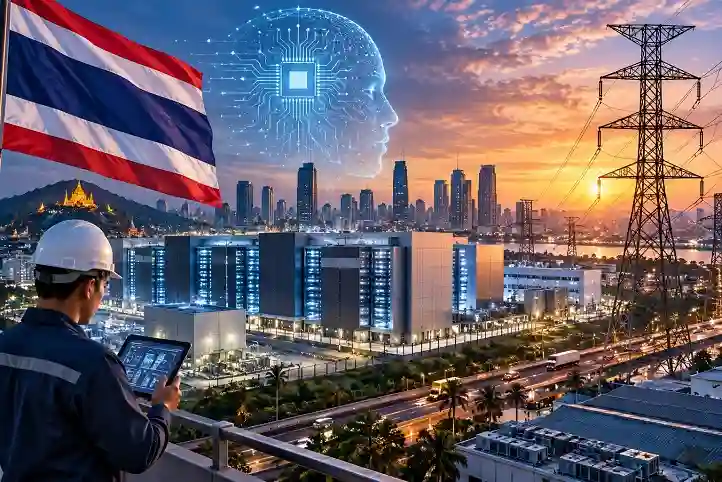
Image Credit: Thailand AI News
The expansion comes as electronics producers increase output for global computing and data center supply chains, while major technology companies continue investing in digital infrastructure. In the middle of this transformation, this Thailand AI News report highlights a difficult balancing act for Thailand: capturing the economic benefits of the global AI investment cycle while ensuring electricity generation, transmission networks, water supplies, and local infrastructure can cope with increasingly power-intensive developments.
Industry Drives Energy Consumption Higher
Domestic energy consumption increased 6 percent during the first half of the year, with industrial users accounting for more than 40 percent of overall consumption. Electronics manufacturing was among the strongest contributors, alongside automobile production, according to Energy Ministry data.
Energy demand also increased across retailers, hotels, tourism businesses, and other commercial operations, indicating that the pressure is not coming exclusively from technology infrastructure.
Thailand has increasingly benefited from international demand for electronics required for computing infrastructure. The International Monetary Fund has also identified Thailand among Asian economies gaining from the technology investment cycle through electronics exports.
Data Centers Create a New Power Challenge
However, the rapid arrival of data centers could substantially increase future electricity requirements. These facilities require continuous power for computing equipment and cooling systems, creating concentrated demand that can place additional pressure on electricity networks.
Concerns over resource availability have already prompted Thai authorities to halt dozens of proposed data center projects while new rules governing electricity and water consumption are developed.
Thailand Faces a Critical Infrastructure Test
Thailand’s AI-linked investment boom could strengthen electronics manufacturing, exports, and the broader digital economy, but its sustainability will increasingly depend on energy planning. Managing data center expansion without compromising grid reliability or creating excessive pressure on electricity and water resources will be crucial as the country attempts to turn technology investment into durable economic growth.