What To Know
- The verdict marks a major turning point in one of Silicon Valley’s most explosive disputes over the future of artificial intelligence and the commercialization of AI research.
- In a post on social media platform X, he insisted that the case had exposed what he still believes was the improper enrichment of OpenAI executives.
AI News: The long-running legal battle between billionaire entrepreneur Elon Musk and Sam Altman has ended in a dramatic courtroom defeat for Musk after a California jury unanimously rejected his claims against OpenAI, Altman, Greg Brockman, and tech giant Microsoft. The verdict marks a major turning point in one of Silicon Valley’s most explosive disputes over the future of artificial intelligence and the commercialization of AI research.
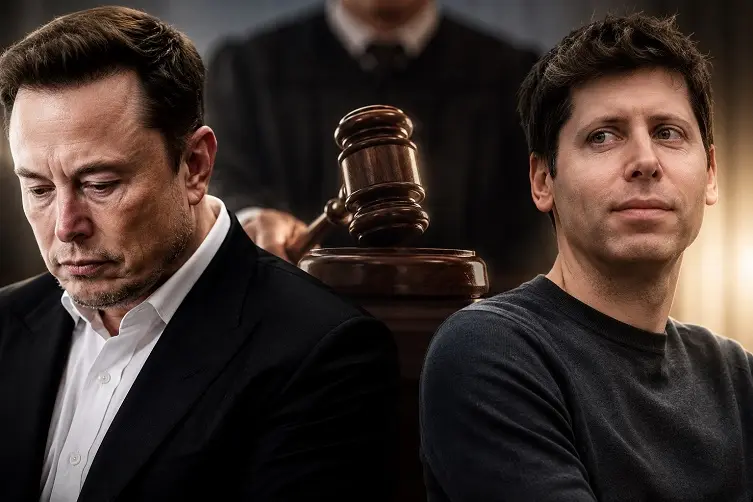
Image Credit: Thailand AI News
Jurors ruled that Musk’s lawsuit had been filed too late under California law, effectively shutting down his accusations that OpenAI’s leadership had transformed a nonprofit AI initiative into a profit-driven empire while sidelining him in the process. The decision arrived after intense courtroom testimony that pulled back the curtain on years of tension, rivalries, and ideological clashes inside the AI industry. During proceedings, this AI News report observed that the case became less about futuristic technology and more about whether legal deadlines and contractual promises had been violated in a timely manner.
Jury Rejects Musk’s Core Claims
Musk had argued that OpenAI’s transition into a for-profit structure represented a betrayal of its original mission to develop artificial intelligence for the benefit of humanity. He accused Altman and Brockman of enriching themselves while allegedly abandoning the nonprofit principles upon which OpenAI was founded.
However, the jury was ultimately persuaded by OpenAI’s legal defense that any potential wrongdoing or harm occurred years before Musk initiated legal action. Lawyers for OpenAI successfully argued that the statute of limitations had expired on the claims Musk was attempting to pursue.
Judge Yvonne Gonzalez Rogers appeared strongly aligned with the jury’s conclusion following the verdict. She stated that the evidence supporting the defense’s position was substantial enough that she had even considered dismissing the case immediately after deliberations ended.
The legal defeat represents a significant setback for Musk, who has increasingly positioned himself as a fierce critic of OpenAI after originally helping establish the organization. The courtroom drama also highlighted the widening rivalry between OpenAI and Musk’s own AI venture, xAI, which has rapidly emerged as a competitor in the global artificial intelligence race.
OpenAI Emerges Stronger Ahead of Expansion Plans
The verdict removes a major cloud hanging over OpenAI as the company continues aggressive global expansion and reportedly prepares for future large-scale financial restructuring and possible public market ambitions.
OpenAI’s lead attorney Bill Savitt harshly criticized Musk after the ruling, describing the lawsuit as an attempt to damage a rival company rather than a legitimate charitable dispute. He claimed the jury quickly recognized what he called inconsistencies between Musk’s allegations and the actual history of OpenAI’s development.
Meanwhile, Microsoft welcomed the outcome of the trial. The company had been accused by Musk of aiding OpenAI in breaching charitable obligations through its multibillion-dollar partnership with the AI company. Microsoft reiterated after the ruling that it remains committed to scaling AI technologies for businesses and consumers worldwide through its collaboration with OpenAI.
The trial also included heated debates over financial damages. Musk’s legal team attempted to argue that OpenAI and Microsoft had gained enormous financial benefits from what they characterized as the misuse of charitable contributions and nonprofit assets. One expert witness estimated the alleged gains could range between $78.8 billion and $135 billion.
Judge Rogers, however, appeared skeptical of those calculations. She openly questioned the logic behind comparing charitable donations to traditional venture capital investments in a for-profit startup environment, suggesting the analysis lacked sufficient factual grounding.
Musk Signals He Is Not Finished
Despite the courtroom defeat, Musk immediately attempted to frame the ruling as a partial moral victory rather than a complete collapse of his claims. In a post on social media platform X, he insisted that the case had exposed what he still believes was the improper enrichment of OpenAI executives.
Musk also confirmed plans to appeal the verdict to the Ninth Circuit Court of Appeals. He argued that allowing charities to allegedly evolve into profit-focused corporations without accountability could damage charitable giving and public trust across the United States.
The failed lawsuit nevertheless underscores how dramatically the AI industry has evolved since OpenAI’s early nonprofit origins. What began as a collaborative effort among tech visionaries has transformed into a fierce global contest involving billions of dollars, geopolitical influence, and intense competition over advanced AI systems.
For now, OpenAI appears to have survived one of its most serious legal threats, while Musk faces the difficult challenge of convincing higher courts that the battle is far from over. The courtroom clash may have officially ended, but the broader war over the future direction of artificial intelligence is clearly still intensifying across Silicon Valley and beyond.
For the latest on Open AI or Grok, keep on logging to Thailand AI News.