What To Know
- The decision follows the European Union’s AI Act transparency requirements, which took effect on August 2 and call for AI-generated or AI-edited material to be marked in a machine-readable way.
- In the case of files, the company is adopting the C2PA open standard, while this AI News report notes that text watermarking could prove particularly significant because written AI content is routinely copied between websites, documents, messaging platforms and publishing systems.
Anthropic is moving to make AI-generated writing easier to identify, confirming that text produced by its models, including Claude, will carry watermarking technology as the artificial intelligence industry adjusts to tougher transparency requirements in Europe. The change represents a significant development for generative AI because watermarking is no longer being confined mainly to images, audio or video—it is moving directly into machine-generated text.
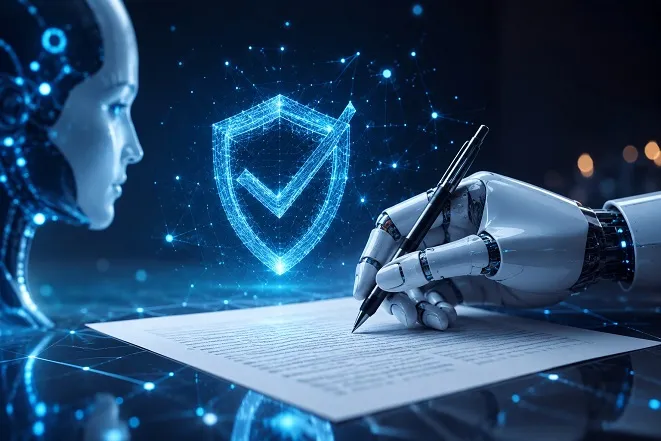
Image Credit: Thailand AI News
The decision follows the European Union’s AI Act transparency requirements, which took effect on August 2 and call for AI-generated or AI-edited material to be marked in a machine-readable way. Anthropic says models released after that date will automatically incorporate technology capable of marking generated text and files. In the case of files, the company is adopting the C2PA open standard, while this AI News report notes that text watermarking could prove particularly significant because written AI content is routinely copied between websites, documents, messaging platforms and publishing systems.
Watermark Designed to Follow Claude Text
One of the most striking elements of Anthropic’s approach is that the watermark is intended to remain associated with generated text even after it has been copied and pasted elsewhere.
According to Anthropic, because the watermark forms part of the text itself, it can travel with the material when users move it between applications and may survive at least some subsequent editing. The watermarking is being implemented at the model level rather than being restricted to one Claude interface.
That distinction matters. It means the technology is intended to work regardless of where users interact with the underlying model, rather than depending entirely on a visible label added by a particular application.
Anthropic says the system will cover products and services including Claude, the Claude platform API, Claude Code, Claude Cowork and Claude Tag. The company also plans to extend watermarking support to older models.
A New Challenge for AI-Written Content
The development could have wide-reaching consequences for publishers, businesses, developers and ordinary users who rely on generative AI for writing.
A major unanswered question is how resilient the watermark will be when text undergoes substantial human editing. Anthropic has indicated that the marker may survive some modifications, but exactly how much rewriting would be required before it becomes undetectable remains unclear.
That issue will be crucial to the practical effectiveness of text watermarking. A system that survives copying, formatting changes and modest revisions could provide regulators and platforms with a useful method of tracing AI-generated material. Conversely, a marker that disappears after relatively straightforward rewriting could be less effective in identifying heavily edited machine-generated content.
AI Companies Face Growing Transparency Pressure
Anthropic is not operating in isolation. Major technology companies including Google, Meta, Microsoft, OpenAI, Black Forest Labs and Synthesia have also committed to supporting the EU’s transparency code for AI-generated content.
The broader technology and media industries are simultaneously experimenting with different ways of identifying synthetic material. AI music company Suno, for example, has announced plans to mark tracks created through its platform amid legal disputes surrounding generative music. Newsletter platform Substack has also partnered with AI-detection company Pangram to help identify content potentially produced using artificial intelligence.
The trend reflects increasing pressure on technology companies to distinguish synthetic content from material created entirely by humans, particularly as sophisticated generative models make those differences increasingly difficult for audiences to recognize unaided.
Watermarking Could Reshape the AI Trust Debate
Anthropic’s move could ultimately become an important test of whether invisible, machine-readable text watermarking can provide meaningful transparency without interfering with legitimate uses of generative AI. Its success will depend heavily on reliability, interoperability and whether the markers remain detectable after content passes through the normal editing process.
For regulators, publishers and technology platforms, the bigger question is whether watermarking becomes an industry-wide standard or merely one component of a much broader system for authenticating digital content. Either way, the arrival of model-level watermarking in Claude signals that identifying the origins of AI-generated text is rapidly moving from an experimental concept toward a practical requirement.
As European rules begin influencing how global AI companies design their products, users well beyond the EU could experience the consequences. The next phase will show whether technical watermarking can genuinely improve accountability while remaining robust enough to function across the increasingly complex digital publishing ecosystem.
Reference: https://support.claude.com/en/articles/16266773-how-claude-marks-ai-generated-content