What To Know
- China’s meteorological authority officially announced the establishment of the China-Thailand Joint Laboratory for Intelligent Prediction and Early Warning of Meteorological Disasters during the meteorological sub-forum of the 2026 World Artificial Intelligence Conference (WAIC) and the High-Level Meeting on Global AI Governance held in Shanghai on July 17.
- Reaffirming the long-standing relationship often described as “Thailand and China are one family,” President Xi emphasized China’s readiness to elevate the comprehensive strategic partnership and create new opportunities through expanded collaboration in economics, investment, artificial intelligence, future industries and regional security.
Thailand AI News: Thailand and China have taken a significant step toward strengthening their strategic partnership by combining artificial intelligence, scientific expertise and regional cooperation to improve disaster preparedness, economic resilience and future technological development. The two countries have unveiled plans for the world’s first bilateral laboratory dedicated to AI-powered meteorological forecasting and early warning, while also expanding discussions on investment, infrastructure, advanced industries and regional security.
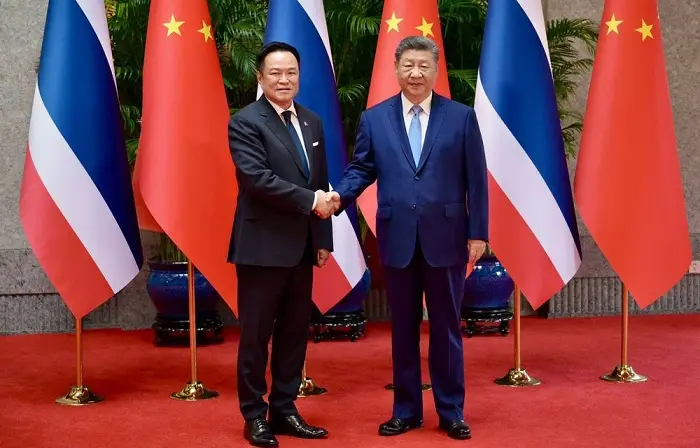
Image Credit: XinHua
The landmark announcement reflects a broader vision shared by both governments to deepen collaboration in sectors expected to define Asia’s future competitiveness. Positioned at the intersection of climate resilience and next-generation technology, this Thailand AI News report highlights how the partnership extends beyond weather forecasting into artificial intelligence, semiconductor development, clean energy, healthcare innovation and strategic economic cooperation, creating opportunities that could reshape both nations’ long-term development agendas.
Historic AI Laboratory Targets Smarter Disaster Prediction
China’s meteorological authority officially announced the establishment of the China-Thailand Joint Laboratory for Intelligent Prediction and Early Warning of Meteorological Disasters during the meteorological sub-forum of the 2026 World Artificial Intelligence Conference (WAIC) and the High-Level Meeting on Global AI Governance held in Shanghai on July 17.
The laboratory represents the first bilateral cooperation facility anywhere in the world dedicated specifically to artificial intelligence applications in meteorology. Its mission is to develop advanced forecasting technologies capable of providing earlier, faster and more accurate warnings for some of the region’s most damaging weather events.
Among the hazards the laboratory will focus on are typhoons, heavy rainfall, prolonged heatwaves and droughts. These weather events have become increasingly destructive across Southeast Asia and East Asia, making faster and more intelligent prediction systems essential for protecting communities, businesses and critical infrastructure.
Beyond public safety, the laboratory is also expected to support cross-border development projects involving electricity generation, agriculture, transportation and major infrastructure investments, sectors that increasingly rely on accurate environmental forecasting to reduce operational risks.
Powered by China’s MAZU Early Warning Platform
The joint initiative will be built around China’s MAZU intelligent meteorological early warning system, an AI-powered platform designed to analyze enormous volumes of atmospheric and environmental data in real time.
Rather than relying solely on conventional forecasting techniques, MAZU integrates artificial intelligence algorithms capable of identifying emerging weather patterns, improving forecast precision and accelerating early warning delivery. This allows governments, emergency agencies and businesses to make critical decisions before severe weather strikes.
The research team assembled for the project includes more than 40 specialists spanning multiple disciplines, including atmospheric science, artificial intelligence, agricultural meteorology, power systems engineering and regional cross-border cooperation.
This multidisciplinary approach reflects the growing recognition that climate resilience can no longer rely exclusively on meteorologists. Instead, successful forecasting increasingly depends on combining AI expertise with engineering, agriculture, infrastructure planning and regional policy coordination.
Leaders Expand Strategic Cooperation Beyond Weather
The laboratory announcement coincided with high-level diplomatic discussions between Thai Prime Minister and Interior Minister Anutin Charnvirakul and Chinese President Xi Jinping during the Prime Minister’s official visit to China.
The meeting, held at the Xijiao State Guest Hotel in Shanghai on July 17, underscored the growing importance both governments place on expanding cooperation across multiple strategic sectors.
President Xi extended his best wishes to His Majesty King Maha Vajiralongkorn on the occasion of His Majesty’s upcoming birthday and expressed appreciation for the strong ties between both countries following the King’s official State Visit to China.
Reaffirming the long-standing relationship often described as “Thailand and China are one family,” President Xi emphasized China’s readiness to elevate the comprehensive strategic partnership and create new opportunities through expanded collaboration in economics, investment, artificial intelligence, future industries and regional security.
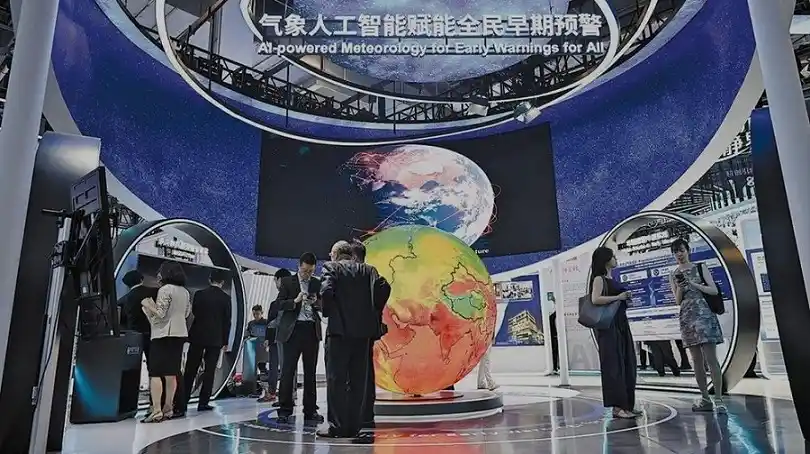
Image Credit: XinHua
Prime Minister Anutin expressed gratitude for China’s continued support and reiterated Thailand’s commitment to strengthening bilateral cooperation across every major sector of national development.
Artificial Intelligence Takes Centre Stage
Artificial intelligence emerged as one of the defining themes throughout the discussions.
Prime Minister Anutin emphasized that AI will become one of the most influential technologies determining national competitiveness over the coming decade. He proposed that Thailand and China work together not only to develop AI technologies but also to strengthen education, workforce development and governance frameworks that ensure the technology delivers benefits broadly across society.
The Prime Minister highlighted the importance of preparing skilled human resources capable of supporting future AI-driven industries while establishing policies that encourage responsible innovation.
He also noted that artificial intelligence can play a crucial role in addressing modern challenges extending beyond economic growth, including combating online crime, improving cybersecurity and responding more effectively to climate change.
These priorities align closely with Thailand’s broader ambitions to accelerate digital transformation while positioning itself as a regional innovation hub.
New Investment Opportunities in Future Industries
The discussions also focused heavily on attracting greater Chinese investment into Thailand’s rapidly evolving technology ecosystem.
Prime Minister Anutin encouraged Chinese companies to consider Thailand as both a manufacturing base and regional headquarters for future industries. Key sectors identified for expanded cooperation include artificial intelligence, semiconductors, health technology, clean energy and environmentally sustainable industries.
Such investments could strengthen regional supply chains while creating higher-value employment opportunities for Thai workers and expanding technology transfer between both countries.
The Prime Minister also encouraged greater use of locally sourced materials and stronger partnerships that support domestic industries while improving Thailand’s competitiveness across international markets.
Observers note that increased cooperation in these sectors could significantly accelerate Thailand’s ambitions under its digital economy and innovation strategies.
Infrastructure and Regional Connectivity Remain Priorities
Beyond technology, both governments agreed to continue accelerating cooperation on regional connectivity.
Discussions included expanding transportation infrastructure by land, sea and air, alongside continued development of regional railway networks designed to facilitate trade, investment and tourism throughout Asia.
Improved logistics networks are expected to strengthen commercial links while reducing transportation costs for businesses operating across multiple countries.
The leaders additionally agreed to deepen cooperation in public health, space technology, education, scientific research and broader people-to-people exchanges designed to reinforce long-term understanding between both nations.
Such initiatives are expected to complement economic cooperation while encouraging greater collaboration between universities, researchers and private industry.
Stronger Security Cooperation Through 2+2 Mechanism
Regional security also featured prominently during the discussions. Thailand and China agreed to establish a new “2+2” dialogue mechanism bringing together the Foreign Ministers and Defence Ministers of both countries for regular strategic consultations.
The mechanism is expected to strengthen coordination on intelligence sharing, combating online crime, addressing emerging security threats and promoting greater regional stability.
As cybercrime becomes increasingly sophisticated and transnational, both governments see enhanced cooperation as essential for protecting businesses, citizens and digital infrastructure.
The new dialogue framework also demonstrates that technological cooperation and security collaboration are becoming increasingly interconnected as artificial intelligence becomes more deeply integrated into national economies.
Regional Stability and International Cooperation
The leaders also exchanged views on several regional issues. Prime Minister Anutin thanked China for supporting peaceful efforts to address the Thai-Cambodian situation through bilateral mechanisms aimed at preserving regional stability.
Both countries also reaffirmed their commitment to supporting peace initiatives in Myanmar while continuing active cooperation through multilateral organizations and regional frameworks including ASEAN-China cooperation, APEC and the Mekong-Lancang Cooperation mechanism.
Officials believe these partnerships will help generate broader economic opportunities while promoting sustainable regional development.
Government spokesperson Ratchada Thanadirek stated that the discussions reflect Thailand’s strategy of using international partnerships to expand economic opportunities, strengthen national competitiveness and transform long-standing diplomatic relationships into practical cooperation that delivers measurable benefits for both countries.
A Partnership Built for the Future
The simultaneous announcement of the AI-powered meteorological laboratory and the expansion of broader Thailand-China cooperation signals a new phase in bilateral relations centered on innovation, resilience and sustainable economic growth. From disaster forecasting and climate adaptation to advanced manufacturing, artificial intelligence and regional security, both governments are laying foundations that extend well beyond traditional diplomatic cooperation. If successfully implemented, these initiatives could strengthen Thailand’s technological capabilities, attract significant investment, improve disaster preparedness and enhance regional competitiveness while reinforcing one of Asia’s longest-standing strategic partnerships.
For the latest A developments in Thailand, keep on logging to Thailand AI News.