
What To Know
- Signal President Meredith Whittaker has described the growing integration of autonomous AI agents into operating systems as an “existential threat” to digital privacy.
- As highlighted in this Thailand AI News report, the concern centers on AI assistants capable of scanning device screens, capturing sensitive information, and potentially storing private conversations without users fully understanding what is being collected.
Encrypted messaging platform Signal is introducing new screenshot restrictions on Android and iOS devices as concerns mount over artificial intelligence systems potentially accessing private conversations. The company warns that increasingly sophisticated AI assistants integrated into operating systems could threaten the confidentiality of communications, even within encrypted applications.
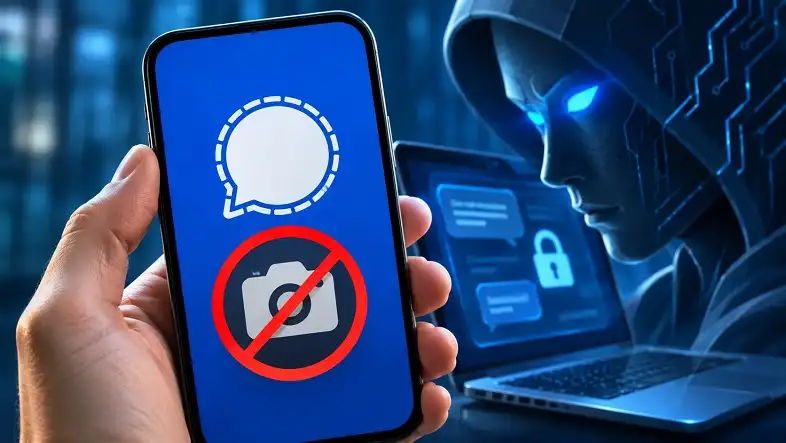
Image Credit: Thailand AI News
Signal President Meredith Whittaker has described the growing integration of autonomous AI agents into operating systems as an “existential threat” to digital privacy. As highlighted in this Thailand AI News report, the concern centers on AI assistants capable of scanning device screens, capturing sensitive information, and potentially storing private conversations without users fully understanding what is being collected.
AI Surveillance Threatens Encrypted Communications
Whittaker warned that AI capabilities embedded within Windows, Android, macOS, and iOS could undermine the privacy protections traditionally offered by secure messaging platforms.
Although Signal encrypts conversations, operating-system-level AI agents may still access information displayed on screens after messages have been decrypted for viewing.
Captured information could subsequently enter local databases or remote servers, placing sensitive communications beyond Signal’s security controls.
Signal Expands Screenshot Restrictions
Signal previously introduced default screenshot blocking within its Windows application to reduce exposure to automated screen capture.
The company is now extending similar protections to Android and iOS, aiming to limit opportunities for AI-powered systems to collect visible conversation content.
Users can disable these restrictions, although Whittaker cautioned that doing so would weaken Signal’s privacy guarantees.
Screenshot Blocking Is Not a Complete Solution
Despite these measures, Signal acknowledges that screenshot restrictions cannot eliminate every potential surveillance vulnerability.
Advanced AI agents might exploit alternative pathways to access application information, raising questions about whether existing privacy safeguards remain sufficient.
Digital Privacy Faces an Uncertain Future
Signal’s warning underscores a growing tension between increasingly autonomous AI assistants and the fundamental expectation of confidential communication.
As operating systems become more deeply integrated with artificial intelligence, protecting personal conversations will require stronger technical safeguards, transparent data collection practices, and meaningful user control over AI access.
Reference:
https://signal.org/blog/protecting-your-privacy