
What To Know
- Thailand has made clear that it does not intend to choose between the United States and China as competition over artificial intelligence, semiconductors and advanced technology increasingly becomes a new front in the rivalry between the world’s two biggest powers.
- He commented during a media interview on the 17th of August at the Government House that rather than concentrating on whether Thailand should choose the United States or China, he said the country should strengthen its own AI capabilities and reduce dependence on any major power.
Thailand has made clear that it does not intend to choose between the United States and China as competition over artificial intelligence, semiconductors and advanced technology increasingly becomes a new front in the rivalry between the world’s two biggest powers. Prime Minister Anutin Charnvirakul told media on August 17th that Thailand would maintain its neutral position, despite reports that Washington could exclude countries participating in a China-backed AI framework from a US-led technology coalition.
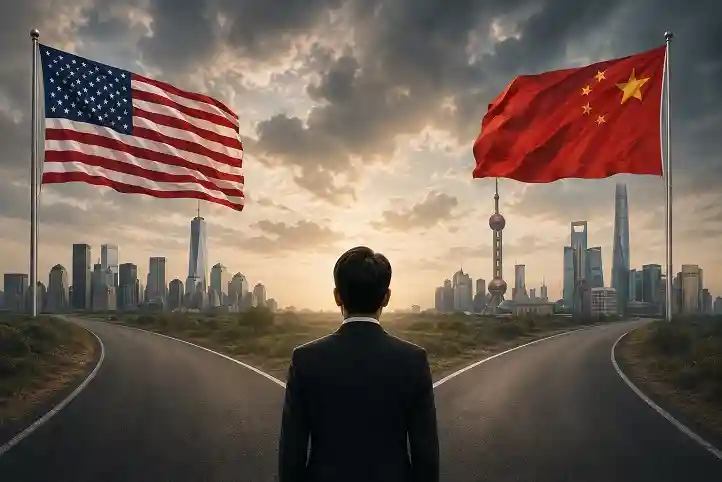
Image Credit: Thailand Medical News
The issue emerged following reports on August 14 that the United States was considering such a move, based on information attributed to a US official and an internal draft. The document was reportedly prepared by the US State Department for the 35 signatories of an American “AI Opportunity Statement” signed in June. As technological competition between Washington and Beijing becomes increasingly intertwined with diplomacy, trade and national security, this Thailand AI News report looks at why Thailand believes keeping its options open may ultimately serve the country’s interests better than becoming dependent on either AI superpower.
US AI Plans Put Thailand’s Neutrality in Focus
The reported American proposal has placed fresh attention on countries such as Thailand that maintain important relationships with both Washington and Beijing.
AI is no longer simply a competition over software. The global race increasingly involves advanced semiconductors, data infrastructure, cloud computing, cybersecurity, critical minerals, research capabilities and access to powerful computing systems.
For Thailand, choosing one technological camp could therefore have consequences extending far beyond which AI platforms its businesses and government agencies eventually use.
Asked whether Thailand’s neutral position could complicate trade negotiations with the United States, Mr Anutin played down the possibility, saying the two issues were unlikely to be connected.
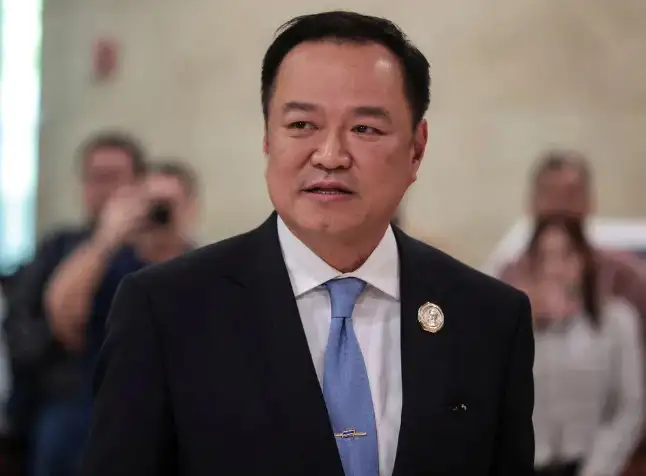
Image Credit: PRD
His comments indicate that Bangkok wants technological cooperation, trade negotiations and security relations to remain separate rather than allowing disagreements in one area to spill into another.
Cobra Gold Remains Separate from Trade
Thailand’s longstanding security relationship with the United States has inevitably raised questions about whether Washington could use defense cooperation to influence Bangkok’s decisions concerning China.
Mr Anutin rejected that suggestion.
He pointed to a meeting in Bangkok last week between US defense officials, led by Pentagon policy chief Elbridge Colby, and the Thai government. According to the prime minister, both countries confirmed that security cooperation — including the Cobra Gold military exercise and US military support — was separate from ongoing trade negotiations.
Cobra Gold remains one of the most prominent symbols of Thai-US defense cooperation and has brought together military personnel from Thailand, the United States and participating countries for decades.
Asked specifically whether the visiting American delegation had pressured Thailand to take a position against China, Mr Anutin dismissed the idea.
He said the atmosphere surrounding the discussions had instead reflected appreciation for the existing relationship and cooperation between the two countries.
The message from Bangkok appears straightforward: Thailand values its security partnership with Washington, but that relationship does not automatically mean following the United States on every issue involving China.
Thailand Wants to Build Its Own AI Power
Higher Education, Science, Research and Innovation Minister Yodchanan Wongsawat offered perhaps the clearest indication of how Thailand intends to navigate the growing technological rivalry. He commented during a media interview on the 17th of August at the Government House that rather than concentrating on whether Thailand should choose the United States or China, he said the country should strengthen its own AI capabilities and reduce dependence on any major power.
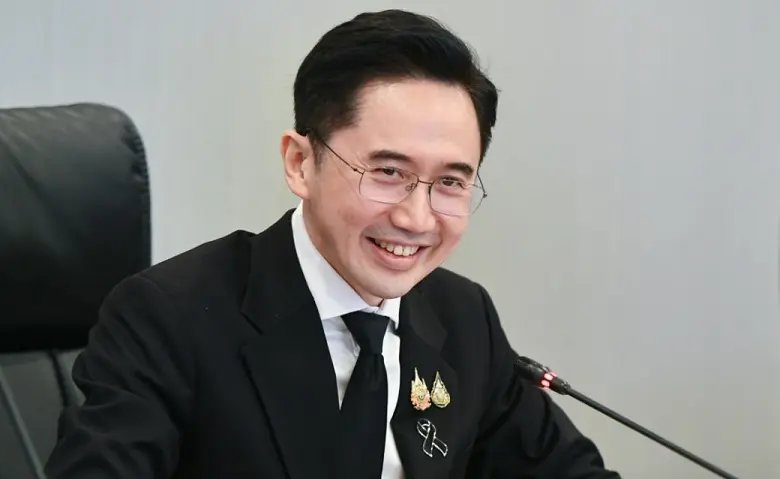
Image Credit: PRD
Thailand has already discussed AI-related issues, including semiconductors, with several countries. Thai representatives have also attended an AI meeting in China held under the World Internet Conference.
The government will consider whether Thailand should participate in the China-linked initiative, but no final commitment has been announced.
Mr Yodchanan’s comments suggest Thailand wants to retain the ability to cooperate with different partners depending on its technological and economic requirements.
That strategy already extends beyond Washington and Beijing. Thailand has been working with countries including France, Japan and South Korea in areas where its domestic capabilities remain limited.
Thailand Looks Beyond AI Software
One of the most significant elements of Thailand’s approach is the recognition that building a competitive AI economy involves much more than gaining access to the latest artificial intelligence models.
Mr Yodchanan said Thailand needs to invest in basic science, technology, hardware, data and cybersecurity.
Those areas could ultimately determine how much genuine technological independence Thailand can achieve.
A country dependent entirely on foreign computing infrastructure, foreign data systems and imported advanced hardware could remain vulnerable even if it has widespread access to sophisticated AI applications.
Developing stronger domestic infrastructure would give Thailand considerably more flexibility when deciding which foreign technologies to adopt and which international partnerships to pursue.
A strong national database could be particularly important. Better control and management of domestic data could allow Thailand to work with different AI systems without becoming permanently tied to one technological ecosystem.
Washington’s Reported Letter Yet to Reach Bangkok
Officials from the Foreign Affairs Ministry said that Thailand had not received the letter reportedly being considered for US allies and partners.
The government will continue monitoring developments. That means the issue has not yet developed into a direct diplomatic dispute between Thailand and the United States. Nevertheless, the reported proposal highlights how rapidly AI cooperation is becoming part of international strategic competition.
The China-backed initiative at the center of the discussion, known as Pax Silica, is aimed at securing supply chains connected with AI models, semiconductors and critical minerals as technological competition between Washington and Beijing intensifies.
Such initiatives demonstrate how AI alliances could increasingly influence access to strategic technology, investment and industrial supply chains.
Thailand’s Neutral Path Faces a Bigger Test
Thailand’s decision not to choose between the United States and China represents more than an attempt to avoid becoming trapped in a diplomatic dispute. It reflects Thailand’s wider ambition to maintain strategic flexibility while developing enough domestic technological capacity to work with multiple international partners.
That balancing act may become considerably harder if Washington and Beijing begin demanding greater technological exclusivity from their partners. Future disagreements could involve semiconductor access, AI infrastructure, cybersecurity standards, data governance, critical minerals or participation in competing technology frameworks.
Thailand’s ability to remain neutral will therefore depend partly on how successfully it develops its own scientific, technological and digital foundations.
Investment in research, hardware, cybersecurity, data infrastructure and skilled personnel could give Bangkok greater freedom to negotiate with different partners instead of accepting technological conditions dictated by a single major power.
For Thailand, the emerging US-China AI rivalry presents both a risk and an opportunity. Remaining neutral could become increasingly difficult as competing technology blocs take shape, but building stronger domestic capabilities could transform that neutrality into genuine strategic leverage. Thailand’s challenge will be ensuring that refusing to pick sides does not leave it caught between two technological giants, but instead gives the country the freedom to choose the partnerships, systems and investments that best serve its own long-term interests.