

What To Know
- The company introduced its SuperPod cluster design and a new lineup of AI accelerators, aimed at significantly boosting computing power and efficiency for data centers.
- By doubling down on cluster-based computing and advancing chip design, Huawei has positioned itself as a central figure in shaping the next wave of AI evolution.
Thailand AI News: A Bold Move into AI Infrastructure
Huawei Technologies has unveiled its next-generation artificial intelligence hardware, signaling a direct challenge to Nvidia’s long-standing dominance. The company introduced its SuperPod cluster design and a new lineup of AI accelerators, aimed at significantly boosting computing power and efficiency for data centers. These innovations mark a calculated step by Huawei to cement its role in global AI development and reduce reliance on Western chip suppliers. Halfway through this Thailand AI News report it becomes clear that Huawei’s strategy aligns closely with China’s broader push for technological self-reliance, particularly in critical sectors like AI and semiconductors.
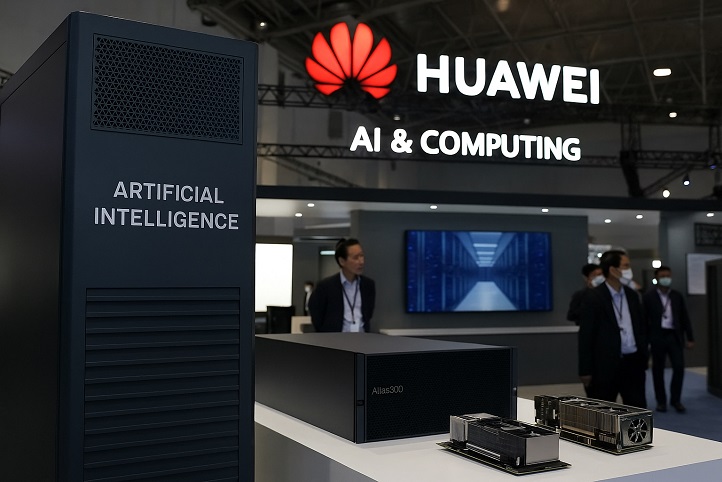
Huawei unveils advanced AI hardware to directly challenge Nvidia’s dominance in data centers and supercomputing.
Image Credit: AI Generated
SuperPod and New AI Chips
The SuperPod is Huawei’s flagship innovation, bundling together nearly 15,000 to 16,000 graphics cards, including its own Ascend AI chips, into one high-performance cluster. While Huawei’s AI chips have not yet reached Nvidia’s level of sophistication, the company’s strategy is to leverage scale—creating massive, cluster-based computing systems capable of training and deploying advanced AI models. Alongside this, Huawei announced that new generations of AI chips will debut next year, expanding its hardware ecosystem and strengthening its foothold in the AI hardware sector.
Efficiency and Cost Competitiveness
Beyond raw power, Huawei’s new AI platform emphasizes energy efficiency and scalability. By integrating optimized chips with tailored software, the system delivers faster model training and inference speeds while consuming less energy. The company has positioned its solution as a cost-effective alternative for enterprises aiming to expand AI workloads at scale. This pitch is designed to appeal not only to Chinese firms but also to international players searching for diversification from Nvidia’s costly GPUs.
Strategic Positioning in a Shifting Market
Industry experts interpret Huawei’s latest announcements as part of a broader shift in the global tech landscape. With rising trade tensions and export restrictions on advanced chips, China is accelerating efforts to foster homegrown innovation. Huawei’s advancements show its determination to evolve into a formidable global competitor, offering alternatives to Western technology in AI and data infrastructure. If the company’s solutions gain traction, Nvidia could face its first substantial rival in years within the high-performance AI computing market.
Huawei’s AI offensive demonstrates a growing confidence in its ability to compete with global leaders despite geopolitical hurdles. By doubling down on cluster-based computing and advancing chip design, Huawei has positioned itself as a central figure in shaping the next wave of AI evolution. Its moves could reshape supply chains, alter enterprise strategies, and redefine how nations view technological independence.
For the latest on AI chips and technology, keep on logging to Thailand AI News.