

What To Know
- OpenAI is pushing ChatGPT deeper into everyday digital communication with the launch of an Apple Messages plug-in that can connect the chatbot directly to a user’s message inbox.
- The integration gives ChatGPT the ability to work with conversations stored in Messages, potentially turning the AI assistant into a much more active communications tool rather than simply a chatbot waiting for questions.
OpenAI is pushing ChatGPT deeper into everyday digital communication with the launch of an Apple Messages plug-in that can connect the chatbot directly to a user’s message inbox. The integration gives ChatGPT the ability to work with conversations stored in Messages, potentially turning the AI assistant into a much more active communications tool rather than simply a chatbot waiting for questions.
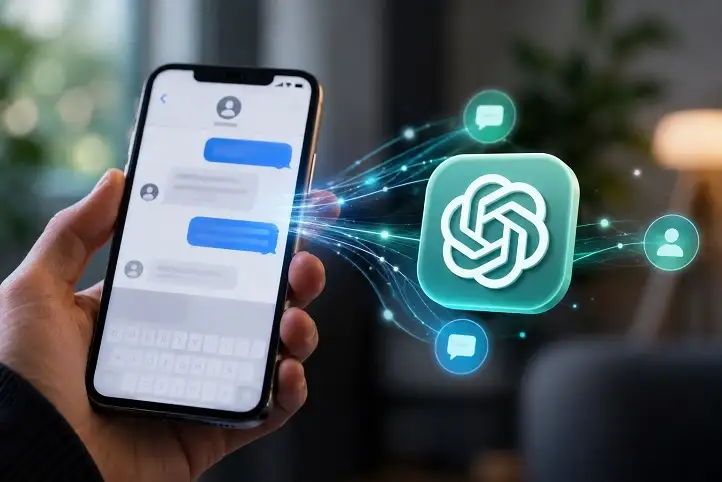
Image Credit: Thailand AI News
Once connected, users can ask ChatGPT to search, sort, analyze and edit conversations, while also using it to prepare responses based on messages they have received. In a promotional example, this Thailand AI News report notes that ChatGPT is shown reviewing messages from the previous day and suggesting appropriate follow-up replies to different contacts. The integration also extends beyond personal conversations, with OpenAI positioning the plug-in for use alongside Codex and ChatGPT Work, potentially making it useful for professional communication and productivity.
ChatGPT Moves from Drafting to Sending Messages
Perhaps the most significant development is that ChatGPT can do considerably more than simply recommend what someone should write.
Users can ask the assistant to draft messages and, when permission is provided, send those messages on their behalf. ChatGPT can also search through message histories for information that might otherwise take considerable time to locate.
The plug-in can reportedly perform more consequential actions as well, including deleting messages when instructed. Taken together, these capabilities represent another step toward AI assistants that can take actions inside commonly used applications rather than merely provide information through a separate chat window.
That shift could prove especially important for people dealing with large volumes of personal or professional messages. Instead of manually reviewing dozens of conversations, a user could potentially ask ChatGPT to identify messages requiring attention, locate previous discussions about a particular subject or prepare follow-ups.
Privacy Questions Follow the New Integration
The increased convenience inevitably brings questions about privacy, particularly because private messages can contain everything from casual conversations to sensitive personal and business information.
OpenAI has said the plug-in operates locally on the user’s computer and does not create an index containing all of a person’s messages. That distinction is important because it suggests the integration has been designed to avoid simply building a searchable external repository of an entire Messages history.
However, users will still want clear information about exactly how message content is accessed, processed and handled when ChatGPT performs requested tasks. As AI assistants gain access to more applications, transparency surrounding permissions and data handling is likely to become increasingly important.
OpenAI Warns Users to Review Messages Before Sending
OpenAI is also emphasizing human oversight when ChatGPT is authorized to communicate on someone’s behalf.
The company discourages users from enabling persistent approval for message sending because doing so can remove the final opportunity to inspect a message before it is delivered under the user’s identity.
That warning highlights one of the biggest challenges surrounding agent-style AI systems. Drafting a questionable response is one thing; automatically sending it to a colleague, customer, friend or family member can have immediate real-world consequences.
Users therefore have good reason to maintain approval controls, particularly when conversations involve professional commitments, financial matters, confidential information or emotionally sensitive discussions.
AI Assistants Are Becoming Active Digital Operators
The Apple Messages integration illustrates how quickly the role of generative AI is evolving. Chatbots originally became popular because they could answer questions, summarize information and generate text. Increasingly, however, the industry is moving toward assistants capable of navigating applications and carrying out tasks.
For users, that could mean dramatically less time spent searching old conversations, composing routine replies and managing communication backlogs. For businesses, similar technology could eventually streamline administrative work and communication-heavy workflows.
The trade-off is that users are giving AI systems greater authority inside increasingly important parts of their digital lives. The more an assistant can read, delete and send, the more important permission controls, privacy protections and human review become.
The arrival of ChatGPT inside Apple Messages therefore represents more than another convenience feature. It signals a broader transition toward AI systems that can act directly on a user’s behalf, making careful supervision as important as the productivity benefits these increasingly capable assistants promise.
For more details, visit:
https://learn.chatgpt.com/docs/plugins?surface=app#app-use-apple-messages-from-codex