
What To Know
- Developed by Meta Superintelligence Labs, the company’s dedicated AI research and development division, Muse Image has been launched across the Meta AI app and integrated into popular services including Instagram Stories and WhatsApp.
- The company also plans to extend the technology to Facebook, Messenger and its advertising platforms, bringing AI-generated visual content directly into the daily experiences of hundreds of millions of users worldwide.
AI Apps: Meta Expands Its AI Ecosystem with Muse Image While Privacy Questions Quickly Surface
Meta has officially introduced Muse Image, a new artificial intelligence-powered image generation platform that marks another major step in the company’s rapidly expanding AI ambitions. Developed by Meta Superintelligence Labs, the company’s dedicated AI research and development division, Muse Image has been launched across the Meta AI app and integrated into popular services including Instagram Stories and WhatsApp.
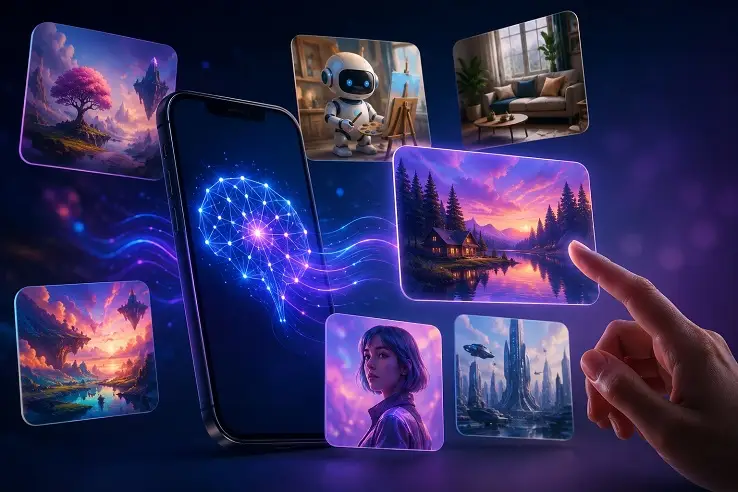
Image Credit: Thailand AI News
The company also plans to extend the technology to Facebook, Messenger and its advertising platforms, bringing AI-generated visual content directly into the daily experiences of hundreds of millions of users worldwide. The launch highlights Meta’s determination to make generative AI an everyday creative tool rather than a standalone application.
Within hours of its release, however, the platform had already sparked widespread discussion across social media and the technology community. This AI Apps news report comes as users, privacy advocates and digital rights experts examine one of Muse Image’s most controversial capabilities—the ability to transform publicly shared Instagram photographs into new AI-generated creations simply by tagging the account owner. Although Meta says the feature only works with public profiles and includes settings that allow users to opt out, critics argue that many people may not even realize their images are eligible for AI manipulation unless they actively change their privacy settings. That debate has quickly become one of the defining talking points surrounding the launch.
Creative Tools Designed for Everyday Users
Muse Image offers many of the features now expected from advanced AI image generators. Users can create imaginative artwork, cartoon-style illustrations, realistic scenes and customized graphics simply by entering text prompts. For people struggling to think of creative ideas, Meta has included preset prompts designed to inspire users and demonstrate the platform’s capabilities.
The company has also built prompt-based editing tools into Muse Image, allowing users to modify existing photographs instead of generating entirely new ones. Examples include removing unwanted people from backgrounds, creating travel-style images featuring famous landmarks, or generating functional QR codes directly from written prompts. These capabilities are designed to simplify image editing for users who may have little or no professional design experience.
Beyond personal creativity, Meta hopes Muse Image will become a practical productivity tool that supports a wide variety of visual tasks across its family of applications.
Social Integration Sets Muse Apart
Unlike many AI image generators that operate as independent websites or applications, Muse Image has been embedded directly into Meta’s existing social ecosystem. Users can access the technology through the Meta AI app while also generating or editing content for Instagram Stories and WhatsApp conversations.
Meta has also announced that Muse Image will play an important role within Facebook Marketplace. One demonstration showed how users can visualize how second-hand furniture might appear inside their own homes before making a purchase. Such integrations illustrate Meta’s strategy of placing generative AI into practical consumer scenarios rather than limiting it to entertainment or artistic experimentation.
The company has also introduced AI-powered visual effects for Instagram Stories, enabling users to apply intelligent filters and creative transformations to their existing photographs with only a few simple commands.
Advertising Becomes a Major Focus
While consumer features have received much of the attention, many industry observers believe the most significant aspect of the launch lies in advertising.
Meta intends to integrate Muse Image into its Advantage+ advertising platform, enabling businesses to rapidly generate promotional images, adapt creative materials and develop campaign assets using artificial intelligence. This represents another major step in automating digital advertising production, allowing marketers to create multiple visual variations quickly while potentially reducing production costs.
For businesses, this could significantly accelerate campaign development. However, it also increases the importance of content review, brand safety measures, image authenticity and transparent AI governance. As AI-generated advertising becomes increasingly common, marketers will need reliable methods to verify the origin of creative assets and ensure they comply with advertising standards.
Technical Challenges Extend Beyond Image Quality
From a technical perspective, embedding AI image generation into large-scale social platforms presents challenges far beyond simply producing attractive pictures.
Muse Image must interpret user prompts accurately, process photographs securely, apply moderation policies, enforce safety rules, filter inappropriate content and deliver results within seconds. These operations must function simultaneously across millions of users while maintaining consistent quality and platform reliability.
Meta says Muse Image builds upon its broader Muse model family, with related technologies supporting multimodal reasoning and advanced tool use. As AI capabilities continue expanding throughout Meta’s ecosystem, researchers will closely monitor whether the company introduces stronger transparency tools, evaluation benchmarks, provenance systems and developer APIs.
Privacy Concerns Overshadow the Launch
Despite the impressive technology, privacy concerns have dominated much of the public conversation.
The ability to create AI-generated content from publicly available Instagram photographs has raised fresh questions about consent and personal data. Critics argue that requiring users to opt out instead of asking for explicit permission places too much responsibility on individuals who may never discover the relevant privacy settings.
These concerns are amplified by Meta’s history of privacy controversies. The company previously received a record US$5 billion penalty from the United States Federal Trade Commission following the Cambridge Analytica data scandal, where information from millions of Facebook users was improperly harvested for political profiling. Meta also discontinued Facebook’s facial recognition system in 2021 following legal challenges and regulatory scrutiny surrounding biometric data collection.
Because of that history, many observers believe Muse Image will face particularly close examination from regulators and privacy advocates as adoption increases.
AI Video Already on the Horizon
Meta has also confirmed that development is already underway on Muse Video, signaling that AI-generated video may soon become another integrated capability across the company’s platforms. If introduced successfully, it would further strengthen Meta’s growing portfolio of AI-powered creative tools, which already includes AI assistants, software development applications and various generative content services.
The broader strategy suggests Meta is positioning artificial intelligence at the center of its long-term product ecosystem, with image generation becoming only one component of a much larger AI-driven future.
Rather than being viewed simply as another image generator entering an increasingly crowded market, Muse Image represents Meta’s effort to weave generative AI directly into social networking, messaging, e-commerce and digital advertising. The technology offers genuine creative opportunities for individuals and businesses alike, but its success will depend on how effectively Meta addresses ongoing concerns surrounding privacy, transparency, user consent and responsible AI governance. As regulators, developers and everyday users continue evaluating the platform, Muse Image may ultimately become a significant test case for balancing innovation with public trust in the next generation of consumer artificial intelligence.
For more on Meta’s Muse Image AI App, visit:
https://ai.meta.com/blog/introducing-muse-image-muse-video-msl
https://about.fb.com/news/2026/07/introducing-muse-image-meta-ai/
For the latest on AI Apps, keep on logging to Thailand AI News.
Visit Also:
https://thailandwellness.news/
https://www.thailandmedical.news
https://www.bangkokbusiness.news/
We have more than 1700 news websites covering various industries and topics across 35 countries and are scaling up to reach 28,000 sites by the end of 2026. We do not use social media accounts to drive traffic rather we depend on search engines and AI platforms along with database marketing involving 82 million names of high spenders from around the globe. Contact us at mktwiz789@gmail.com for more details or for pr, marketing and branding collaborations.