
What To Know
- Now, with Poke becoming the first independent AI agent granted access to the platform, Apple appears to be opening the door to a new category of intelligent services.
- While Poke’s approval does not represent a full-scale opening of Apple’s app ecosystem to AI agents, it nonetheless serves as a strong signal that Apple is actively exploring ways to integrate autonomous AI services into its products.
AI News: Apple has quietly taken a major step toward the future of artificial intelligence-powered communication by approving Poke as the first standalone AI agent to operate on its Messages for Business platform. The move marks a significant shift for Apple’s messaging ecosystem and signals that AI agents may soon become a much more common part of everyday digital interactions.
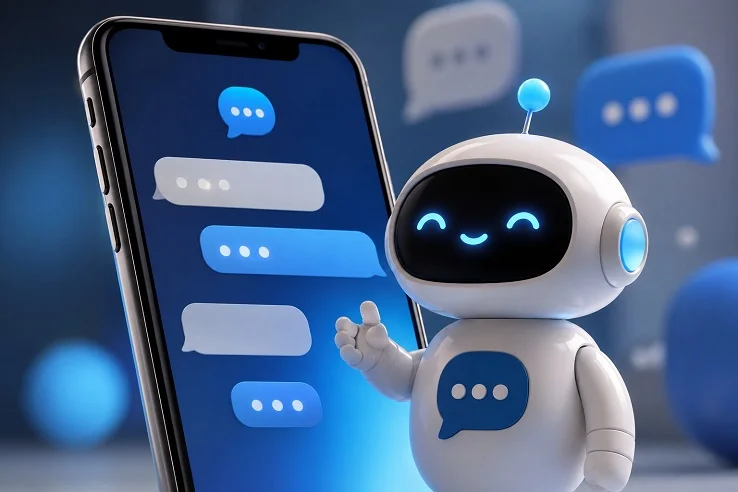
Image Credit: Thailand AI News
For years, Apple’s Messages for Business platform was primarily reserved for companies such as airlines, retailers, banks, and hotel chains seeking to communicate with customers through iMessage. The system allowed businesses to provide customer support, booking services, appointment scheduling, and automated assistance within a secure and familiar messaging environment. Now, with Poke becoming the first independent AI agent granted access to the platform, Apple appears to be opening the door to a new category of intelligent services. In the process, this AI News report highlights what could become one of the most important developments in the evolution of consumer-facing AI agents during 2026.
Bringing AI Agents to Everyday Users
Poke was launched in March with a mission that differs from many advanced AI agent platforms currently available. Rather than targeting developers, researchers, or technically sophisticated users, the startup focuses on making AI assistance accessible through something nearly everyone already understands: text messaging.
Users interact with Poke simply by sending messages, avoiding the need for complex interfaces, coding knowledge, or command-line tools. This accessibility has helped the company gain traction rapidly in a market increasingly crowded with AI-powered assistants.
The service is capable of handling a wide range of everyday tasks. Users can request help with daily planning, calendar organization, personal productivity, health and fitness tracking, smart-home controls, and even photo editing. By transforming AI interaction into a familiar messaging experience, Poke aims to eliminate many of the barriers that have traditionally limited adoption of advanced AI tools.
According to company figures, the platform has already facilitated approximately 100 million messages since its launch, demonstrating strong early user engagement.
Apple’s Timing Raises Industry Interest
The announcement comes at a particularly interesting moment for Apple. The approval of Poke arrives only days before Apple’s Worldwide Developers Conference (WWDC), where the technology giant is widely expected to unveil new AI initiatives, including a significantly upgraded Siri designed for an AI-first era.
Industry observers have speculated for months that Apple is preparing broader support for AI-powered applications and agents across its ecosystem. Rumors have also circulated regarding possible changes to the App Store that could create new opportunities for AI agent developers.
While Poke’s approval does not represent a full-scale opening of Apple’s app ecosystem to AI agents, it nonetheless serves as a strong signal that Apple is actively exploring ways to integrate autonomous AI services into its products.
The move may offer an early glimpse into Apple’s broader AI strategy—one that emphasizes controlled deployment, platform oversight, and user trust rather than unrestricted access.
Expanding Beyond SMS and Messaging Apps
Before gaining access to Apple’s platform, Poke already operated across several communication channels. Users could engage with the AI agent through traditional SMS messaging, Telegram, and WhatsApp in selected regions.
The addition of iMessage significantly expands the service’s reach, especially among Apple users who prefer to remain within Apple’s tightly integrated ecosystem. Instead of downloading a separate application or navigating unfamiliar interfaces, users can communicate with the AI agent through the same messaging environment they already use daily.
This convenience could become a major competitive advantage as AI companies race to embed intelligent assistants into familiar consumer experiences rather than requiring users to adapt to entirely new platforms.
A New Revenue Opportunity for Apple
Beyond the technological implications, Poke’s approval may reveal an emerging business model that could prove highly lucrative for Apple.
Marvin von Hagen, co-founder of The Interaction Company of California, the startup behind Poke, disclosed that Apple charges the company on a per-user basis for access to the Messages for Business platform. Although exact pricing details remain confidential, von Hagen indicated that Apple’s fees are significantly lower than comparable costs associated with Meta’s AI ecosystem following regulatory changes in Europe.
The arrangement suggests Apple could generate a substantial new revenue stream if AI agents become widespread across its messaging infrastructure. Instead of relying solely on hardware sales, subscriptions, and traditional app revenue, Apple could potentially monetize access to its communication platforms by charging AI service providers.
For AI startups, however, the model introduces a new cost of distribution that must be factored into future growth plans. As AI services scale to millions of users, platform access fees could become a significant operational expense.
Nevertheless, von Hagen expressed optimism about Apple’s long-term commitment to AI agents, suggesting that support for such services is likely to expand rather than contract in the coming years.
A Lengthy Approval Process
Becoming the first AI agent on Apple’s Messages for Business platform was not a simple process.
According to company executives, gaining approval required months of preparation and compliance work. Apple required Poke to demonstrate that human support could be provided when necessary and that users would always be clearly informed when interacting with an AI system rather than a human representative.
The company also had to provide references and documentation from messaging infrastructure providers while redesigning aspects of its interface to align with Apple’s strict guidelines.
Among the changes implemented were support for Apple-style button designs and the replacement of inline hyperlinks with Apple-approved link previews. These modifications were necessary to ensure consistency with the broader iMessage user experience.
Von Hagen noted that future companies seeking similar approval should expect a lengthy process involving extensive reviews and platform compliance checks.
Trust as a Competitive Advantage
Beyond technical requirements, company leadership believes trust played a major role in securing Apple’s approval.
As concerns about AI reliability, misinformation, and questionable growth tactics continue to grow across the technology industry, Poke has emphasized quality, transparency, and responsible deployment as core elements of its brand identity.
According to von Hagen, Apple’s priorities appeared closely aligned with those values. The company wanted assurance that users would clearly understand they were communicating with an AI system and that support mechanisms would remain available when needed.
Such alignment may become increasingly important as regulators, consumers, and technology platforms place greater emphasis on AI safety and accountability.
Funding Momentum Fuels Expansion
Investor confidence in Poke continues to strengthen as the company expands.
Backed by major investors including Spark Capital and General Catalyst, the startup recently secured an additional $10 million in funding. This follows a previous seed round that raised $15 million.
The fresh capital has pushed the company’s post-money valuation to approximately $300 million, an impressive figure for a startup employing only around ten people.
The funding will likely support continued platform expansion, product development, and broader adoption across Apple’s ecosystem as invitations roll out to existing users interested in migrating to the new iMessage experience.
What This Means for the Future of AI Messaging
Apple’s decision to approve Poke may ultimately be remembered as a pivotal moment in the evolution of consumer AI. Rather than forcing users to adopt entirely new platforms, the industry is increasingly moving toward embedding intelligent agents into communication channels people already use every day. If Apple continues expanding support for AI agents while maintaining its emphasis on trust, privacy, and platform control, the company could become one of the most influential gatekeepers in the emerging AI economy, reshaping how millions of consumers interact with artificial intelligence over the coming decade.
For more details, visit:
For the latest on new AI apps or AI agents, keep on logging to Thailand AI News.