

What To Know
- Spain’s fast-rising space technology startup Xoople has secured a massive $130 million Series B funding round, positioning itself as a serious contender in the rapidly evolving world of AI-powered geospatial intelligence.
- While Xoople has remained tight-lipped about the exact number of satellites it plans to deploy, the emphasis is clearly on quality over quantity, with a focus on building highly optimized AI-ready datasets rather than traditional imaging archives.
AI Startups: Madrid startup bets big on AI-driven satellite intelligence as global demand for real-time Earth data accelerates
Spain’s fast-rising space technology startup Xoople has secured a massive $130 million Series B funding round, positioning itself as a serious contender in the rapidly evolving world of AI-powered geospatial intelligence. The company, founded in 2019, is aiming to build a next-generation satellite constellation designed specifically to feed high-quality, real-time data into artificial intelligence systems.
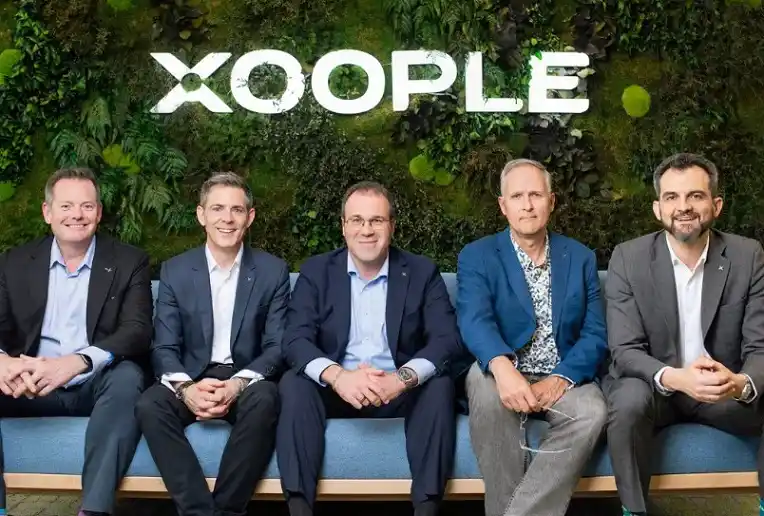
Image Credit: Xoople
The funding round, led by Nazca Capital, also includes backing from MCH Private Equity, CDTI, Buenavista Equity Partners, and Endeavor Catalyst. This capital injection brings Xoople’s total funding to approximately $225 million and places the company firmly in what its leadership describes as “unicorn territory.”
This AI News report highlights how Xoople is attempting to redefine how Earth observation data is collected, processed, and delivered to enterprise users worldwide.
Strategic Partnership Signals Serious Intent
Alongside the funding announcement, Xoople revealed a critical partnership with L3Harris Technologies, a major U.S.-based aerospace and defense contractor known for its advanced satellite imaging systems. The collaboration will see L3Harris develop specialized optical sensors for Xoople’s upcoming spacecraft.
These sensors are expected to generate data streams significantly more advanced than current Earth monitoring systems, potentially improving precision by orders of magnitude. While Xoople has remained tight-lipped about the exact number of satellites it plans to deploy, the emphasis is clearly on quality over quantity, with a focus on building highly optimized AI-ready datasets rather than traditional imaging archives.
This partnership also gives Xoople a major advantage: access to decades of engineering expertise in building resilient, space-grade hardware. For a startup, this dramatically reduces development risk and shortens the timeline to operational deployment.
A New Model for Earth Observation
Unlike traditional satellite companies that retrofit existing imaging systems for AI use, Xoople is designing its entire infrastructure with machine learning at its core. Its goal is to create what CEO Fabrizio Pirondini describes as an “Earth’s System of Record” — a continuously updated, highly accurate digital representation of the planet.
This approach reflects a broader shift in the industry. As AI models become more sophisticated, the demand for high-quality, structured data is exploding. Xoople is betting that purpose-built satellites, optimized for machine learning workflows, will outperform legacy systems originally designed for human analysts.
Interestingly, the company has already laid out its distribution strategy even before launching its own satellites. By integrating with major enterprise platforms such as Microsoft and Esri, Xoople is embedding itself directly into ecosystems where governments, corporations, and GIS professionals already operate.
Competitive Landscape Heats Up
Xoople enters a crowded and competitive field that includes established players like Planet, BlackSky, Airbus, and Vantor. These companies already operate satellites in orbit and offer AI-enhanced datasets to customers across industries.
However, Xoople’s differentiation lies in its focus on enterprise integration and data quality. Instead of simply selling raw imagery, the company aims to embed actionable insights directly into customer workflows. This could prove especially valuable in sectors such as agriculture, where real-time crop monitoring can optimize yields, or logistics, where supply chain disruptions can be detected early.
Government applications are also a key target, including infrastructure monitoring, disaster response, and transportation network analysis. These use cases highlight the growing importance of geospatial intelligence as a strategic asset.
Timing Aligns with AI Boom
The timing of Xoople’s funding round is no coincidence. The global surge in artificial intelligence development has created an insatiable appetite for high-quality training data. Earth observation data, particularly when updated in real time, is becoming increasingly valuable for training advanced AI models capable of visual reasoning and predictive analytics.
Market projections suggest the Earth observation sector could exceed $15 billion by 2030, driven largely by AI-powered applications. In this context, satellite constellations are no longer just data collection tools — they are becoming foundational infrastructure for the AI economy.
At the same time, many early-stage satellite startups are facing financial pressure, struggling to balance high capital expenditure with slow revenue growth. Xoople’s substantial funding and strategic partnerships may give it the resilience needed to navigate this challenging phase and emerge as a long-term leader.
Spain Emerges as a Space Tech Contender
Beyond the company itself, Xoople’s success carries broader implications for Spain’s technology ecosystem. Historically, much of Europe’s space tech investment has been concentrated in the UK and Germany. This funding round signals a shift, positioning Spain as an emerging hub for deep tech innovation.
The scale of the investment also demonstrates growing investor confidence in the intersection of space infrastructure and artificial intelligence. As AI capabilities continue to advance, the bottleneck is increasingly shifting from algorithms to data — and companies like Xoople are racing to fill that gap.
The Road Ahead
Xoople now faces a critical phase. With significant capital secured and a top-tier manufacturing partner in place, the focus shifts to execution. Building and launching a satellite constellation is a complex, capital-intensive endeavor, and the company must prove it can deliver on its ambitious promises.
The next 18 months will be crucial. Success will depend not only on technological performance but also on the company’s ability to attract and retain enterprise customers in a highly competitive market.
What is clear, however, is that Xoople represents a bold vision for the future of Earth observation — one where AI and space technology are deeply intertwined. If successful, it could redefine how businesses and governments understand and interact with the planet in real time. The stakes are high, but so is the potential reward, as the race to build the data backbone of the AI era intensifies.
For more details on Xoople, visit:
For the latest on AI Startups, keep on logging to Thailand AI News.