What To Know
- In a bold move clearly aimed at reclaiming dominance in the AI race, Google has unveiled a dramatic overhaul of its research assistant tool, introducing a reimagined version of Gemini Deep Research powered by its newest and most advanced foundation model—Gemini 3 Pro.
- The company also announced plans to integrate the Deep Research agent into a number of flagship products, including Google Search, Finance, the Gemini App, and NotebookLM.
Thailand AI News: Google Unleashes Its Most Powerful Research AI Yet
In a bold move clearly aimed at reclaiming dominance in the AI race, Google has unveiled a dramatic overhaul of its research assistant tool, introducing a reimagined version of Gemini Deep Research powered by its newest and most advanced foundation model—Gemini 3 Pro. This release, which took place the very same day OpenAI launched its anticipated GPT-5.2 (codenamed “Garlic”), signals the intensifying battle for supremacy in the agentic AI arena.
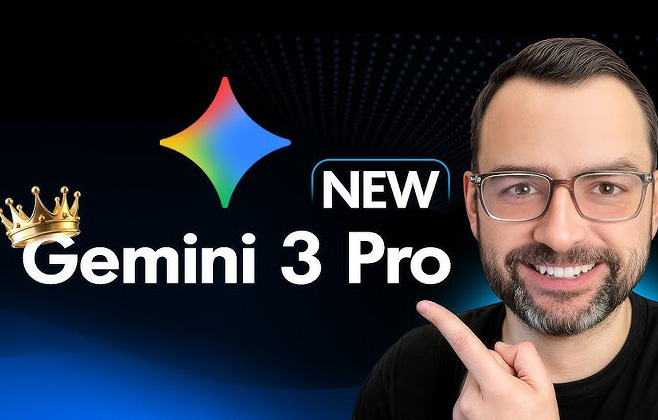
A new AI showdown begins as Google unveils Gemini Deep Research while OpenAI releases GPT 5.2 Garlic
Image Credit: StockShots
Unlike traditional AI chatbots that generate simple summaries or reports, Gemini Deep Research now goes far beyond static output. Google has equipped this upgraded agent with the ability to ingest and reason over massive context windows, enabling deep multistep analysis across highly complex domains.
According to this Thailand AI News report, the new system is already being used by enterprise clients for mission-critical applications ranging from legal due diligence to drug safety evaluations.
A New Agent for a New Era of Autonomous AI
What makes this update even more groundbreaking is Google’s launch of the Interactions API, allowing developers to embed Gemini Deep Research’s capabilities directly into their own applications. The move represents a major leap forward in agentic architecture — where AI tools don’t merely respond to prompts, but independently navigate and execute complex chains of logic and actions across time.
The company also announced plans to integrate the Deep Research agent into a number of flagship products, including Google Search, Finance, the Gemini App, and NotebookLM. This signals Google’s broader strategy: to move users away from traditional search habits and into a future where AI agents become the primary gateway to information.
Fewer Hallucinations and More Reasoning Muscle
One of the key promises of Gemini 3 Pro is improved factual accuracy. Google claims the model has been specifically tuned to reduce hallucinations—those dangerous moments when an LLM confidently fabricates false information. These errors become exponentially riskier in long-form autonomous tasks, where a single mistake can compromise hours of computation and layered decisions.
To validate its claims, Google introduced DeepSearchQA, a new benchmark designed to test multistep information-seeking capabilities. The company also tested Gemini Deep Research on two respected third-party benchmarks—BrowserComp and the challenging Humanity’s Last Exam. While Google’s agent outperformed rivals in DeepSearchQA and Humanity’s, OpenAI’s GPT 5.2 slightly edged it out in the browser-based BrowserComp challenge.
A Duel of Titans in Real Time
The synchronicity of both launches was no coincidence. As the AI world watched OpenAI roll out its Garlic-powered GPT-5.2, Google fired back with its own advanced offering. While benchmark supremacy remains a moving target, the message is clear: the future of AI lies in intelligent agents capable of navigating complex workflows—not just chatting or summarizing.
Google’s Gemini Deep Research update cements the company’s ambitions to lead the agentic AI revolution, even as OpenAI continues pushing the benchmark bar higher. The race is no longer just about how smart an AI sounds—it’s about how well it can reason, act, and solve real-world problems on its own.
For more on Gemini Pro 3, visit: https://deepmind.google/models/gemini/pro/
For the latest on Gemini and OpenAI, keep on logging to Thailand AI News.