What To Know
- Huawei has revealed its latest AI infrastructure at the Huawei Connect conference, aiming to strengthen its competitive edge in the rapidly evolving artificial intelligence sector.
- This policy shift effectively removes Nvidia from one of the largest AI markets in the world, leaving an opening for Huawei to step in and dominate the domestic sector.
Huawei Unveils a Bold New AI Infrastructure
Huawei has revealed its latest AI infrastructure at the Huawei Connect conference, aiming to strengthen its competitive edge in the rapidly evolving artificial intelligence sector. The Shenzhen-based technology giant introduced its new SuperPoD Interconnect technology, which can link together up to 15,000 graphics cards, including Huawei’s own Ascend AI chips, to deliver enhanced compute power for training and scaling next-generation AI systems. This AI News report highlights how the move comes at a pivotal moment when global chip dynamics are being reshaped by politics and sanctions.
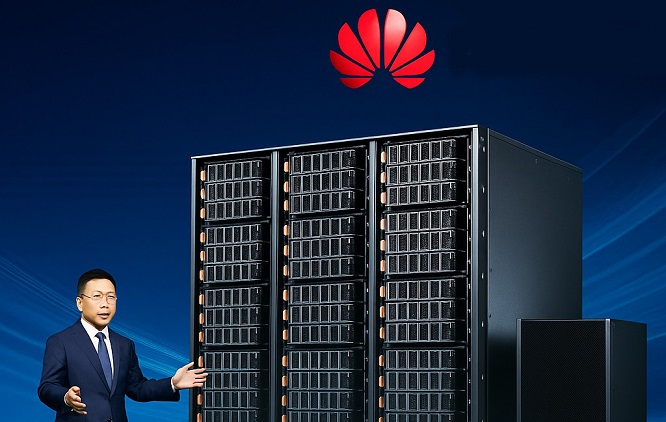
Huawei unveils SuperPoD Interconnect to challenge Nvidia as China bans US chips
Image Credit: AI-Generated
A Direct Challenge to Nvidia’s Dominance
The SuperPoD Interconnect is widely viewed as Huawei’s strategic answer to Nvidia’s NVLink system, which has long been considered a gold standard in AI chip interconnectivity. While Huawei’s AI chips are still not as individually powerful as Nvidia’s, the ability to cluster thousands of them together offers a practical workaround. This clustering unlocks immense compute power that could level the playing field for Chinese firms developing cutting-edge AI applications.
Timing Aligns with Nvidia’s Exclusion from China
Huawei’s announcement comes just one day after Beijing ordered domestic technology companies to stop purchasing Nvidia hardware, including the RTX Pro 600D servers that were specifically designed for the Chinese market. This policy shift effectively removes Nvidia from one of the largest AI markets in the world, leaving an opening for Huawei to step in and dominate the domestic sector. It also underscores the growing tech decoupling between China and the United States, with AI infrastructure at the center of this rivalry.
Building a Self-Reliant AI Future
By leveraging SuperPoD Interconnect, Huawei is positioning itself as a vital supplier for Chinese enterprises now cut off from Nvidia’s advanced hardware. Analysts believe that while Huawei still faces challenges in chip design sophistication and raw power, its ability to offer scalable compute through interconnection is a significant breakthrough. It signals a step toward self-reliance in AI computing, something China’s government has been aggressively prioritizing.
Global AI Power Balance Could Shift
The unveiling also carries wider global implications. As Chinese companies increasingly adopt Huawei’s systems, this could spark a new round of innovation and competition in AI infrastructure. For global firms, it raises questions about where future breakthroughs will emerge, and whether Chinese-developed platforms will begin setting industry standards. If Huawei can prove its architecture both powerful and reliable, it could permanently shift the AI balance away from reliance on Western semiconductor giants. The development underscores how geopolitics, national security, and technology are now fully intertwined in shaping the next era of artificial intelligence, with Huawei pushing forward at a critical juncture.
For the latest on Huawei’s AI initiatives, keep on logging to Thailand AI News.