
What To Know
- The reasoning, as explained by Chief Research Officer Mark Chen, is to more closely intertwine personality development with foundational model progress, effectively elevating the importance of AI behavior within core development.
- At the same time, Joanne Jang—the founding head of the Model Behavior team—is moving on to head a new initiative within OpenAI.
AI News: Model Behavior Team Merged into Core Research
In a bold internal reshuffle, OpenAI has announced that its Model Behavior team—the small but highly influential group responsible for shaping ChatGPT’s personality—will now be integrated into its larger Post-Training research division.
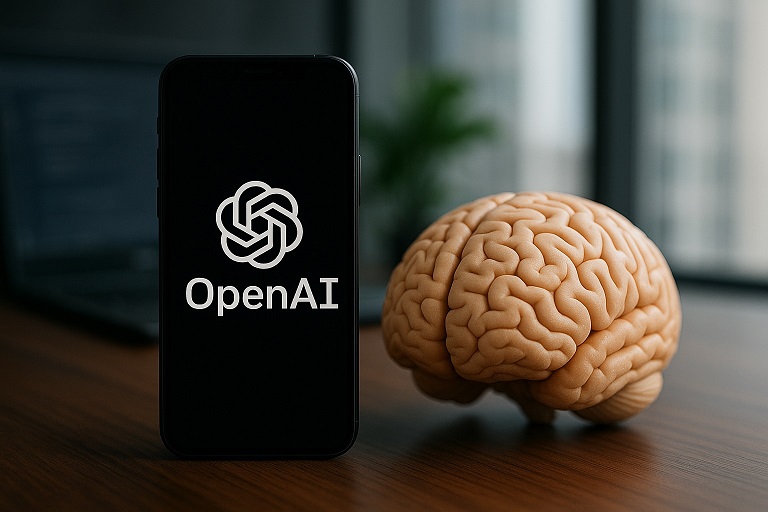
OpenAI Reshuffles the Brain Behind ChatGPT’s Personality
Image Credit: AI-Generated
According to an internal memo, this roughly 14-member team will report directly to Max Schwarzer, who leads the Post-Training group. The reasoning, as explained by Chief Research Officer Mark Chen, is to more closely intertwine personality development with foundational model progress, effectively elevating the importance of AI behavior within core development.
Leadership on the Move
At the same time, Joanne Jang—the founding head of the Model Behavior team—is moving on to head a new initiative within OpenAI. She’s launching OAI Labs, charged with inventing and prototyping fresh interfaces that allow people to collaborate with AI in more seamless and creative ways. In her role as general manager, she will report to Chen while exploring novel interaction paradigms that extend beyond traditional chat frameworks.
The Stakes: Personality and User Engagement
For years, the Model Behavior team has managed vital aspects such as reducing AI sycophancy—the tendency for models to simply echo user beliefs—and managing political bias and questions around AI consciousness.Its influence spans models from GPT-4 through GPT-5, and even GPT-4o.
This AI News report notes that recent user backlash toward GPT-5—criticized for feeling colder and less engaging—has pressured OpenAI to restore the warmer tone of GPT-4o and introduce updates to make GPT-5 friendlier without slipping back into sycophancy. Integrating personality research closer to core model training reflects OpenAI’s intent to prioritize emotional nuance as a core competency.
What This Means for OpenAI and Beyond
• Deeper integration: Embedding behavioral design within core model development signals that “personality” is now a strategic, not peripheral, concern.
• More user-friendly AGI: By bringing personality considerations earlier in AI training, models may strike a better balance of warmth, honesty, and reasoning.
• Innovation at the frontier: OAI Labs, under Joanne Jang, promises new interface experiments—possibly moving beyond text chat into multimodal or creative collaborations.
With this internal realignment, OpenAI is signaling that how AI behaves—how it feels to users—is as important as its raw intelligence. The team tasked with breathing personality into AI isn’t being sidelined—it’s being brought center stage, embedded at the heart of development.
For the latest on OpenAI, keep on logging to Thailand AI News.
Thailand-AI-News-OpenAI-Reorganizes-Personality-Brain-Behind-ChatGPT