

What To Know
- Unlike the audio-only smart glasses that Google plans to release later this year, the more advanced Android XR display glasses include a visual overlay system that projects information directly into the user’s field of view.
- Activating Gemini AI is done through a two-second press on the side of the glasses frame.
AI News: Google Pushes AI Wearables into The Mainstream
Google has once again ignited excitement across the global technology industry after unveiling its next-generation Android XR smart glasses during the Google I/O developer conference. The futuristic eyewear combines artificial intelligence, augmented reality, voice interaction, photography, translation, and navigation into a single wearable platform that could dramatically reshape how people interact with digital information in daily life.
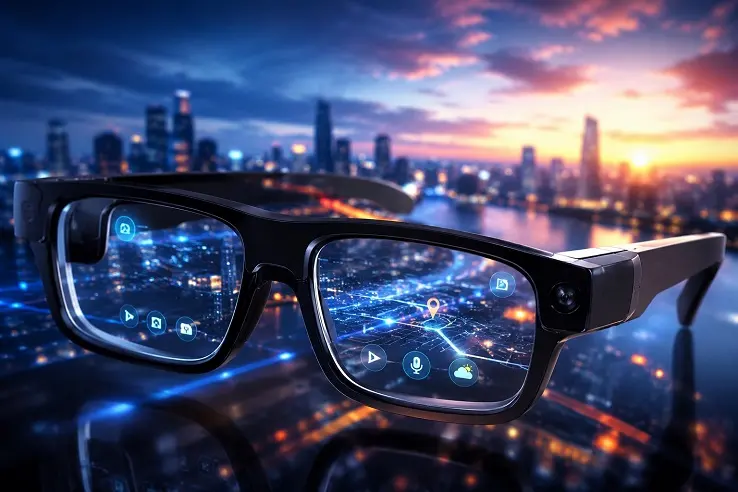
Image Credit: Thailand AI News
Unlike the audio-only smart glasses that Google plans to release later this year, the more advanced Android XR display glasses include a visual overlay system that projects information directly into the user’s field of view. Wearers can see widgets, directions, weather updates, live translations, app shortcuts, and notifications floating naturally over the real world. This AI News report notes that Google’s ambitions extend far beyond creating another smart gadget. The company appears to be positioning Gemini AI as a constantly available assistant integrated directly into human vision and everyday experiences.
The Android XR glasses were first teased last year, but the latest demonstrations revealed a much more mature platform that is rapidly moving toward consumer readiness. Google is developing the eyewear in partnership with Warby Parker, Gentle Monster, and Samsung, blending advanced AI systems with fashion-focused hardware design.
Prototype Reveals Google’s Long-Term Vision
The glasses demonstrated at Google I/O were still prototypes, but they already offered a surprisingly polished experience. Google representatives explained that the current prototype was intentionally designed to prioritize internal technology and experimentation rather than cosmetic perfection. This allows engineers to focus heavily on display systems, battery performance, camera integration, and comfort before finalizing retail-ready designs.
The prototype frames looked relatively simple compared to fashionable commercial eyewear, but they were lightweight and comfortable enough for extended use. Google stated that future versions will feature more refined styling and multiple frame options suited for different consumer preferences.
One interesting detail is that the shipping version of the glasses will automatically detect when users place them on or remove them from their head. However, the prototypes demonstrated at the event did not yet include that feature.
Activating Gemini AI is done through a two-second press on the side of the glasses frame. Once activated, users hear a startup tone indicating that Gemini is listening and ready to respond. In the current prototype, activating Gemini also starts the onboard camera automatically, although Google confirmed that future versions will allow users to customize privacy and camera settings.
Music Playback and Everyday Convenience
One of the first demonstrations involved audio playback through the glasses’ built-in speakers. Users could simply ask Gemini to play music from favorite artists without touching a smartphone.
Because the Google I/O venue was crowded and noisy, the audio quality was difficult to evaluate fully. Even at maximum volume, the music lacked the crispness and detail offered by premium earbuds or headphones. However, the glasses are not necessarily designed to replace dedicated audio devices. Instead, they appear aimed at users who want lightweight audio access while remaining aware of their surroundings.
The open-ear design allows users to hear nearby conversations, traffic, and environmental sounds much more naturally than traditional earbuds. This could make the glasses especially appealing for walking, jogging, hiking, traveling, or doing chores around the house.
Users can stop music playback by tapping the side of the frame, offering a simple and intuitive control system.
AI Photography and Image Manipulation
Photography is another major focus of Google’s smart glasses ecosystem. Users can either press a physical capture button or verbally instruct Gemini to take photographs.
Once a photo is captured, the image is transferred to connected smartphones and processed using Google’s Gemini AI infrastructure. During demonstrations, users were able to request AI-generated modifications almost instantly. One example involved asking Gemini to transform a photographed person into an anime-style character.
The AI processing required roughly 45 seconds during the conference due to overloaded Wi-Fi conditions, but the demonstration still highlighted how generative AI is becoming increasingly integrated into wearable technology.
Google also revealed that future versions of the glasses will support video recording through long presses on the capture button. Users would then see preview thumbnails directly within the visual interface.
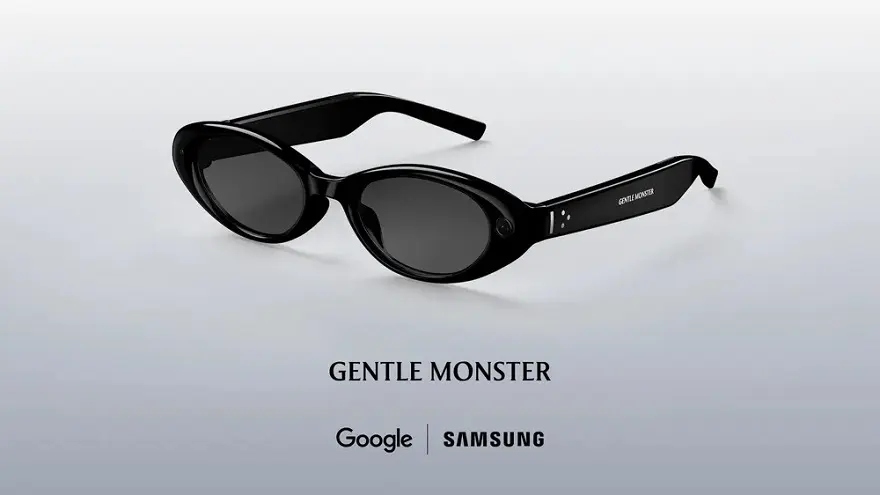
Image Credit: Google
In-Lens Displays Create a Futuristic Experience
Perhaps the most impressive feature of the Android XR glasses is the integrated visual display system. The prototype tested during the conference used a single display positioned over the right eye, although Google confirmed the platform supports both single-eye and dual-eye configurations.
The display projects information into the wearer’s field of vision in a style similar to futuristic heads-up displays seen in science fiction films. Users can view weather widgets, app shortcuts, countdown timers, and navigation prompts while still maintaining awareness of the physical world around them.
However, the display technology is not yet perfect. Some testers reported slight blurriness and occasional eye strain after prolonged use. In one case, the display became clearer only after closing one eye, suggesting that certain users may experience adjustment issues depending on their vision conditions.
Despite these limitations, the technology already demonstrates significant progress compared to earlier generations of augmented reality eyewear.
Real-Time Translation Could Become a Killer Feature
One of the strongest demonstrations at Google I/O involved real-time language translation powered by Google Translate and Gemini AI.
During the showcase, a demonstrator spoke rapid Spanish while the glasses automatically detected the language, translated it into English text displayed directly in front of the wearer, and simultaneously delivered spoken English translations through the glasses speakers.
The experience appeared remarkably smooth and natural, creating the impression of near-instant multilingual communication.
For international travelers, business professionals, and tourists, this feature alone could become a major selling point. Google also noted that the translation experience will work on the upcoming audio-only glasses, although users would see text transcriptions on their phones instead of within the glasses themselves.
If Google can refine and commercialize this capability effectively, the company may fundamentally alter how people communicate across language barriers.
Navigation Without Looking at A Smartphone
Google also demonstrated how the glasses integrate with Google Maps to provide immersive navigation experiences.
Users can ask Gemini to guide them to destinations using simple conversational language such as “take me to the nearest coffee shop.” Once navigation begins, turn-by-turn directions appear directly within the user’s field of view.
Looking downward reveals a map with the familiar blue location indicator, while looking forward restores simplified directional prompts. Users can even rotate physically to orient the map correctly, much like adjusting navigation on a smartphone.
This system could significantly reduce the need to constantly check smartphones while walking through unfamiliar locations, potentially improving both convenience and pedestrian safety.
Because the glasses connect directly with Google Maps on smartphones, saved destinations such as “home” and “work” are automatically accessible.
AI Vision Expands Beyond Smartphones
Google also showcased Gemini’s visual recognition capabilities using the glasses. Users could identify objects, ask questions about books, analyze recipes, or recognize artwork simply by looking at them.
In one demonstration, the glasses initially struggled to recognize a Monet painting replica because the onboard camera was not enabled. After reactivating the camera and focusing more carefully, Gemini successfully identified the artwork.
Other tests worked much more smoothly, with the AI instantly recognizing plants and recipe ingredients.
Although these features overlap somewhat with existing technologies like Google Lens, the wearable implementation makes the experience feel far more seamless and immediate because users no longer need to pull out their smartphones.
Competition In the AI Glasses Race Intensifies
Google’s renewed push into smart glasses comes as competition in the AI wearable sector accelerates rapidly. Meta has already gained significant attention through its Ray-Ban smart glasses partnership, while Snap continues investing heavily in augmented reality technologies.
Google’s strategy appears more ambitious because it combines AI assistance, augmented reality displays, real-time translation, photography, navigation, and visual recognition into a single integrated ecosystem powered by Gemini.
Still, several challenges remain before mass adoption becomes realistic. Battery life, pricing, comfort, privacy concerns, and public acceptance will all influence whether AI glasses become mainstream consumer devices.
The rise of wearable AI also raises ethical questions involving surveillance, facial recognition, data collection, and psychological dependency on continuous digital assistance. Public trust may ultimately become just as important as technological sophistication.
Even so, Google’s Android XR glasses offer one of the clearest glimpses yet into a future where artificial intelligence becomes visually integrated into human life rather than remaining confined to smartphones and computers. The technology is still evolving, but the demonstrations strongly suggest that wearable AI could soon become one of the most transformative consumer technology trends of the next decade.
For more details, visit:
https://blog.google/products-and-platforms/platforms/android/android-xr-io-2026
For the latest on Google’s AI Glasses, keep on logging to Thailand AI News.