

What To Know
- Thailand’s campaign to create a new generation of artificial intelligence and digital technology innovators took center stage as the Digital Economy Promotion Agency (DEPA), under the Ministry of Digital Economy and Society (DE), staged the National Coding &.
- The national event opened on August 21 with an official ceremony and specialist seminars examining the technologies expected to influence Thailand and the global economy.
Thailand’s campaign to create a new generation of artificial intelligence and digital technology innovators took center stage as the Digital Economy Promotion Agency (DEPA), under the Ministry of Digital Economy and Society (DE), staged the National Coding & AI Competition as a major component of the Coding Thailand 2026: AI Inspires the Future project. Held from August 21–23, 2026, at MCC Hall on the third floor of The Mall Lifestyle Store Bangkapi, the national event brought together 210 leading youth teams from across the country.
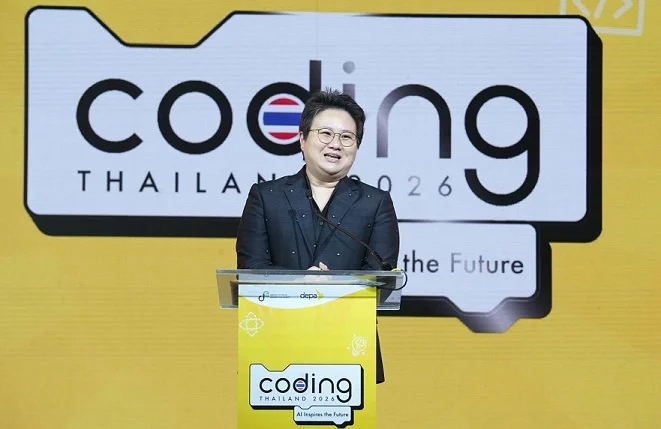
Image Credit: DEPA
The three-day competition provided a national platform for young Thai innovators to demonstrate projects involving coding, artificial intelligence, robotics, AIoT, and other emerging technologies. With scholarships and funding for digital skills learning centers totaling more than 27 million baht, this Thailand AI PR News report highlighted how DEPA had positioned Coding Thailand 2026 as considerably more than a conventional student competition. The program focused on developing problem-solving, critical-thinking, teamwork, communication, entrepreneurial, and technology skills that could prepare young people for Thailand’s increasingly AI-driven economy.
DEPA Put Young Innovators in the National Spotlight
The event was presided over by Nan Bunthida Somchai, Deputy Minister of Digital Economy and Society, who said the National Coding & AI Competition had provided young people with opportunities to demonstrate their ability to develop real-world projects.
Participants progressed from identifying challenges and designing solutions to applying technology and creating practical innovations. They were also able to exchange knowledge with fellow competitors, educators, specialists, and partner organizations.
The competition reflected Thailand’s broader transition from Digital Transformation toward AI Transformation. While computer education had previously concentrated heavily on using existing technology, the new direction encouraged young Thais to become creators capable of developing technologies, products, services, and solutions of their own.
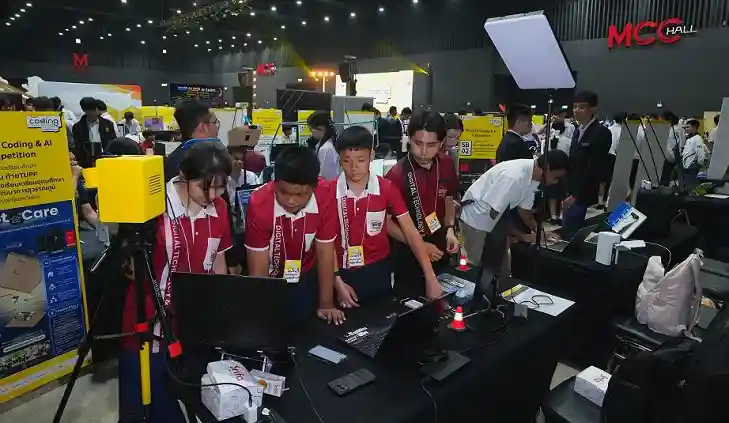
Image Credit: DEPA
The experience was intended to provide a starting point for participants to continue developing their education, future careers, and innovations while applying digital technology for wider social and economic benefits.
Coding Thailand 2026 Drew 806 Teams Nationwide
Coding Thailand 2026: AI Inspires the Future continued the development of the Coding Thailand initiative, which DEPA had operated since 2018.
Dr. Supakorn Sittichai, Acting Director-General of DEPA, said the program had sought to expand access to digital technology education among students, teachers, and educators while building capabilities in coding, AI, AIoT, robotics, business knowledge, and essential soft skills.
More than 30 online courses had been made available to prepare participants before Regional Coding & AI Competitions were conducted in eight provinces: Bangkok, Ubon Ratchathani, Khon Kaen, Phitsanulok, Chiang Mai, Chonburi, Songkhla, and Phuket.
A total of 806 teams entered the nationwide program before 210 top teams were selected for the national stage. They consisted of 70 primary-level teams, 70 secondary-level teams, and 70 vocational-level teams.
The selected competitors subsequently participated in incubation and mentorship programs involving university faculty members and private-sector experts, helping them improve their prototypes and prepare for the National Coding & AI Competition.
Three Days Put Thailand’s AI Skills to the Test
The national event opened on August 21 with an official ceremony and specialist seminars examining the technologies expected to influence Thailand and the global economy.
Sessions included “AI Inspires the Future: Global Trends Shaping Tomorrow” and “Future-Ready Thailand: Empowering Industries through Coding, AI and Digital Innovation.” Experts from technology companies and the private sector contributed insights into artificial intelligence, coding, innovation, and future industries.
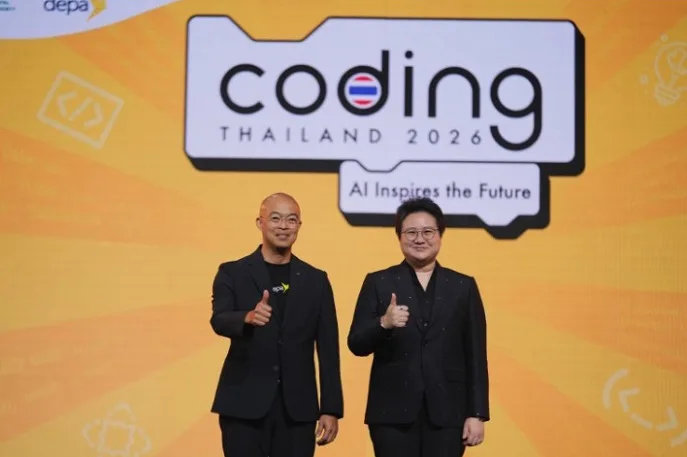
Image Credit: DEPA
August 22 featured the regional awards ceremony and presentations by 45 National Coding & AI Competition finalists. On August 23, leading competitors returned for the Best of the Best presentations before the final awards ceremony.
A total of 112 awards were presented during the competition, while scholarships and funding provided further opportunities for participants and educational institutions to continue developing digital capabilities.
Major Companies Backed DEPA’s Digital Talent Push
Coding Thailand 2026 also received substantial cooperation from private-sector and educational partners, demonstrating the growing importance businesses placed on Thailand’s future technology workforce.
AIS ACADEMY supported digital and AI skills development, while Suntory Beverage & Food (Thailand) provided additional support for Best of the Best and Platinum award-winning teams as well as special prizes.
True Corporation supported the “Leadership, Communication & Mindset in AI Projects” learning voucher program through TRUE DIGITAL ACADEMY. AIA Thailand continued providing funding to participating schools, while Ericsson Thailand also supported the project.
A wider network included Arduino, Floino, Nowawise, Exdream, Intel, Meta, Microsoft, Pumpkin, SCB Academy, and Xtool. Their involvement strengthened the connection between classroom learning, technological innovation, and the skills businesses were increasingly seeking from Thailand’s future workforce.
Coding Thailand 2026 Signaled a Bigger AI Ambition
The National Coding & AI Competition ultimately demonstrated how DEPA and the Ministry of Digital Economy and Society had increasingly connected youth education with Thailand’s longer-term AI ambitions.
Rather than limiting digital education to learning how existing software and devices worked, Coding Thailand 2026 encouraged young participants to experiment, build prototypes, solve problems, and think about how technology could generate economic and social value.
The scale of the program was particularly significant. Starting with 806 teams and narrowing the field to 210 national competitors created a substantial pipeline of young technology talent while exposing participants to mentorship, industry knowledge, competition, and practical innovation.
The challenge ahead would be maintaining that momentum and ensuring young innovators continued receiving opportunities after the competition ended.
However, DEPA’s combination of education, mentorship, corporate participation, financial support, and national competition had provided a meaningful foundation for developing Thailand’s future digital workforce. If sustained, initiatives such as Coding Thailand 2026 could help turn today’s student innovators into tomorrow’s AI developers, entrepreneurs, engineers, and technology leaders.
For more on DEPA, visit:
https://www.depa.or.th/th/home