

What To Know
- A new wave of innovation is reshaping the future of robotics, and at the center of it is a bold ambition.
- A rising startup named Antioch is positioning itself at the forefront of this shift, with a vision to become a foundational platform for what many are now calling “physical AI.
AI-Startups: The Race to Bridge Virtual and Real Worlds
A new wave of innovation is reshaping the future of robotics, and at the center of it is a bold ambition: to make machines learn about the physical world as easily as software learns in the digital one. A rising startup named Antioch is positioning itself at the forefront of this shift, with a vision to become a foundational platform for what many are now calling “physical AI.” The idea is simple but powerful—engineers should be able to program robots and autonomous systems with the same flexibility and speed as they write code for apps or websites.
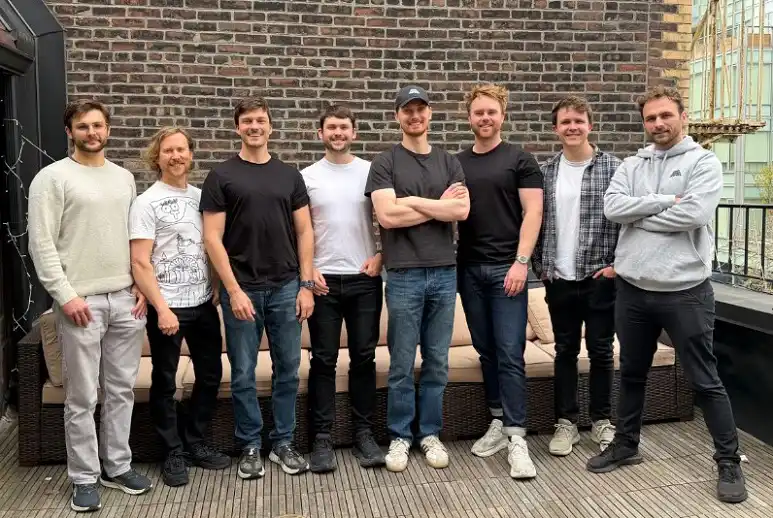
Image Credit: Antioch
Yet, despite rapid progress in artificial intelligence, the physical world remains stubbornly difficult to model. Unlike digital environments where data is abundant and easily manipulated, real-world data is expensive, slow to gather, and often incomplete. Robotics companies today still rely heavily on building physical test environments or collecting vast amounts of sensor data from real-world operations, both of which come with significant costs and limitations.
This is where Antioch enters the picture, offering simulation tools designed to close what experts refer to as the “sim-to-real gap”—the challenge of ensuring that systems trained in virtual environments behave reliably in real-world conditions.
Funding Fuels Ambition in a Growing Sector
Antioch recently secured $8.5 million in seed funding, bringing its valuation to $60 million. The funding round was led by A* and Category Ventures, with participation from several prominent venture firms. The investment underscores growing confidence in simulation as a critical layer in the physical AI stack.
Founded in New York in May last year, Antioch brings together a team with deep expertise in both AI and systems engineering. The founding group includes veterans from leading tech companies and successful startups, combining experience in machine learning, robotics, and data infrastructure. Their collective goal is to accelerate how robots are designed, trained, and deployed.
This AI Startups news report highlights how Antioch is not just building tools but attempting to redefine workflows for an entire industry.
Why Simulation Is Becoming Essential
The limitations of real-world data collection have long slowed down robotics innovation. Building physical prototypes, running field tests, and capturing edge-case scenarios can take months or even years. Simulation offers a scalable alternative, allowing developers to create digital replicas of environments and run thousands of experiments simultaneously.
Antioch’s platform allows engineers to generate multiple virtual instances of their robots, complete with simulated sensors that mirror real-world inputs. This enables rapid testing, reinforcement learning, and data generation in a controlled environment. Developers can simulate rare or dangerous scenarios without risking damage to equipment or human safety.
However, the challenge lies in accuracy. If a simulation does not closely match reality, the results can be misleading or even dangerous when deployed. Antioch addresses this by leveraging advanced models and building domain-specific tools that enhance realism and usability.
Learning from Software’s Evolution
The company draws inspiration from the transformation seen in software engineering over the past decade. Tools that simplified coding, testing, and deployment helped fuel the explosion of SaaS platforms. Antioch aims to bring a similar revolution to robotics by making simulation accessible, scalable, and reliable.
The comparison to modern AI coding assistants is deliberate. Just as developers can now write and test code faster using intelligent tools, Antioch envisions a future where robotics engineers can iterate on physical systems entirely within virtual environments before ever touching hardware.
This shift could dramatically reduce costs and shorten development cycles, particularly for startups that lack the resources of large corporations.
Expanding Use Cases Across Industries
Antioch is initially focusing on sensor and perception systems, which are critical components in applications such as autonomous vehicles, agricultural machinery, drones, and industrial automation. These systems rely heavily on accurate data interpretation, making them ideal candidates for simulation-based training.
Interestingly, while the company’s pitch is geared toward startups, it has already attracted interest from large multinational corporations investing heavily in robotics. This suggests that the need for scalable simulation tools is universal, cutting across company sizes and industries.
Researchers are also beginning to explore new possibilities using Antioch’s platform. Experimental work includes using AI models to design robots and then testing them within simulated environments, even allowing different models to compete in virtual challenges. Such approaches could open up entirely new ways of benchmarking and improving AI systems.
The Road Ahead for Physical AI
Despite the excitement, significant challenges remain. Achieving true fidelity between simulation and reality is a complex problem that requires advances in physics modeling, sensor accuracy, and computational efficiency. The industry is still in its early stages, and widespread adoption will depend on continued improvements in these areas.
Nevertheless, momentum is building. Industry leaders increasingly believe that the future of robotics development will be heavily software-driven, with simulation playing a central role. The ability to iterate quickly and safely in virtual environments could unlock a new era of innovation.
Antioch’s vision aligns with this trajectory, aiming to provide the tools that make such a future possible. By enabling developers to create and refine autonomous systems primarily in software, the company hopes to accelerate progress across the entire field of physical AI.
What This Means for the Future
The emergence of platforms like Antioch signals a broader shift in how technology is developed and deployed. If successful, simulation could become the backbone of physical AI, much like cloud computing became essential for modern software. This would not only lower barriers to entry but also foster a more dynamic and competitive ecosystem.
At the same time, the stakes are higher in the physical world. Errors in robotics can have real-world consequences, making reliability and safety paramount. This adds urgency to the development of robust simulation tools that can accurately predict real-world behavior.
Antioch is betting that solving this challenge will position it as a key enabler of the next generation of intelligent machines. Whether it can truly become the “Cursor for physical AI” remains to be seen, but its early progress suggests that the race to bridge the digital and physical worlds is well underway.
As the boundaries between software and hardware continue to blur, one thing is clear: the future of AI will not just live in code—it will move, act, and interact in the real world. And the tools that make that possible are being built today
For more details on Antioch, visit:
For the latest AI Startups, keep on logging to Thailand AI News.