What To Know
- Taiwan and Thailand have formalized a groundbreaking partnership this week to push forward the commercialization of AI healthcare tools, with a deal aimed at validating medical AI models across both countries.
- In all, the MOU paves the way for a more integrated regional approach to AI in medicine, potentially serving as a model for other cross-border cooperation.
Thailand AI News: Taiwan and Thailand have formalized a groundbreaking partnership this week to push forward the commercialization of AI healthcare tools, with a deal aimed at validating medical AI models across both countries. This Thailand AI News report details how the two sides will work together to ensure that smart health technologies are both effective and safe for patients in their respective systems.
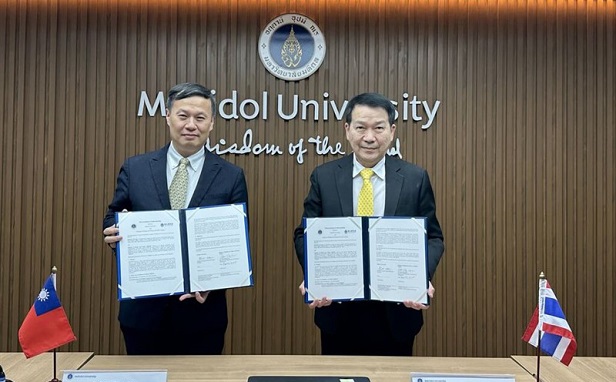
Taiwan and Thailand’s health officials signing the AI medical model validation MOU
Image Credit: Taiwan’s Ministry of Health and Welfare
What the Agreement Covers
The memorandum of understanding (MOU) was signed by Taiwan’s Ministry of Health and Welfare (MOHW), represented by its Department of Information Management, and Thailand’s Mahidol University. Under the agreement:
Mahidol University will recommend AI medical models to be tested in selected Taiwanese hospitals.
Taiwanese hospitals will in turn partner with hospitals affiliated with Mahidol University in Thailand to set up pilot validation sites.
AI systems developed in either country can undergo paid testing at both locations, with terms to be jointly determined.
Federated Learning to Safeguard Data
A key technical component is Taiwan’s federated learning platform, which links together four clinical AI validation centres. This setup allows institutions to train and evaluate AI models using large datasets without sharing raw patient data, reducing risks to privacy while boosting model reliability. Such a framework is essential especially as medical AI becomes more sensitive to both performance and ethical scrutiny.
Why This Matters
Since 2024, Taiwan has invested in validation centres that uphold international data and performance standards. These resources, together with the new collaboration, are seen as important steps toward making Taiwan a global hub for smart healthcare research and innovation. For Thailand, the benefits include gaining access to external testing environments, data from different populations, and stronger assurance that AI models are clinically valid.
Implications and Opportunities
Accelerated certification and adoption: Having joint validation sites should speed up the approval process for AI health tools, reducing duplication and boosting confidence among regulators and healthcare providers.
Data diversity and robustness: Training with wider datasets helps ensure that AI tools perform effectively across varied demographics and health systems.
Economic and research synergy: The collaboration may lead to shared commercial opportunities, academic exchange, and innovation ecosystems that benefit both nations.
In all, the MOU paves the way for a more integrated regional approach to AI in medicine, potentially serving as a model for other cross-border cooperation. It shows how public institutions in Asia are moving from isolated pilot projects toward strong, structured partnerships with real clinical and commercial stakes.
For the latest on AI projects or initiatives in Thailand, keep on logging to Thailand AI News.