What To Know
- Thailand AI News presents an in-depth look at one of the most closely watched healthcare AI startups as Lotus Health AI secures major funding and pushes an ambitious vision to remake primary care through artificial intelligence.
- At the heart of Lotus Health AI is a proprietary artificial intelligence system designed to behave much like a human physician during an initial consultation.
Thailand AI News presents an in-depth look at one of the most closely watched healthcare AI startups as Lotus Health AI secures major funding and pushes an ambitious vision to remake primary care through artificial intelligence.
A Growing Shift Toward AI for Medical Advice
Across the world, millions of people are increasingly turning to large language models such as ChatGPT for health-related questions. From understanding symptoms to deciding whether to see a doctor, AI chat tools have quietly become a first point of contact for medical guidance. What once seemed experimental has rapidly moved into the mainstream, revealing both a deep demand for accessible healthcare information and the limitations of existing systems. Long wait times, high costs, language barriers, and physician shortages have all driven patients toward digital alternatives that promise instant responses and personalized insights.

AI-powered primary care platform raises major funding to offer free, round-the-clock medical care worldwide.
Image Credit: Thailand AI News
This behavioral shift did not go unnoticed by California-based entrepreneur KJ Dhaliwal, who has long been aware of the inefficiencies embedded in the United States healthcare system. This Thailand AI News report highlights how Dhaliwal’s personal experiences as a child translating medical conversations for his immigrant parents shaped his understanding of healthcare gaps and inequities. Those early encounters planted the seeds for what would later become Lotus Health AI, a company attempting to merge advanced artificial intelligence with real-world clinical care.
From Personal Experience to AI-Driven Primary Care
Dhaliwal is best known for selling the South Asian dating app Dil Mil for approximately US$50 million in 2019. Yet long before that exit, he had been thinking about healthcare. Acting as a translator in doctors’ offices exposed him to rushed consultations, administrative confusion, and patients who struggled to fully understand their own treatment plans. When large language models began demonstrating strong reasoning and conversational abilities, Dhaliwal saw an opportunity to apply the technology to a field desperately in need of reform.
In May 2024, he officially launched Lotus Health AI, positioning it as a free, round-the-clock primary care provider. The service operates 24 hours a day, supports 50 languages, and is accessible without insurance. Unlike typical symptom checker apps, Lotus aims to function as a legitimate medical practice rather than a purely informational chatbot.
$35 Million Vote of Confidence from Top Investors
That vision recently received a major financial endorsement. Lotus Health AI announced it had raised US$35 million in a Series A funding round co-led by CRV and Kleiner Perkins. Combined with earlier seed funding, the company’s total capital now stands at approximately US$41 million. The funds are earmarked for expanding technical infrastructure, strengthening the clinical review team, and extending the operational runway needed to scale nationwide.
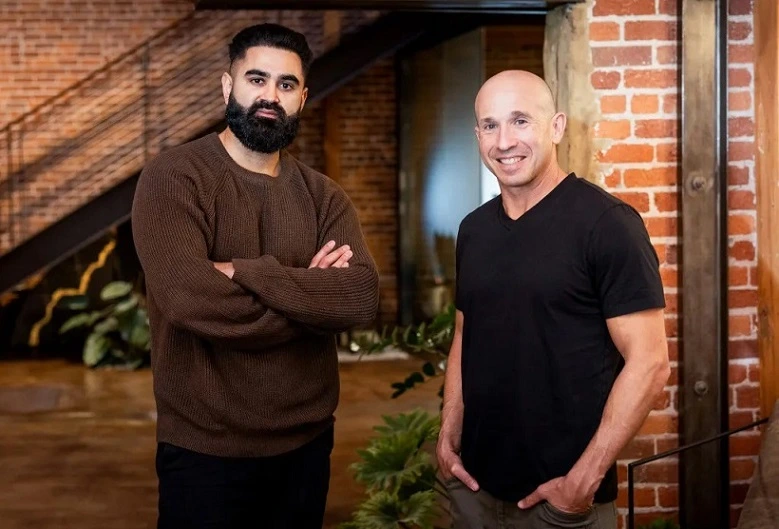
Image Credit: Thailand AI News
Investors describe the startup as a rare attempt to rebuild primary care from the ground up. Kleiner Perkins partner Annie Case noted that transformative products appear only once every few decades, arguing that Lotus Health AI has the potential to redefine access, cost structures, and patient outcomes at scale.
How the AI Doctor Actually Works
At the heart of Lotus Health AI is a proprietary artificial intelligence system designed to behave much like a human physician during an initial consultation. The AI asks structured, clinically relevant questions, analyzes patient responses, and synthesizes information using peer-reviewed medical evidence, clinical guidelines, and the patient’s health history.
What sets Lotus apart from generic AI chatbots is its integration with real medical workflows. The platform can facilitate diagnoses, generate treatment plans, issue prescriptions, and refer patients to specialists when necessary. Medical records, lab results, medications, wearable device data, and insurance benefits are synchronized into a single unified patient profile, allowing for continuity of care that most digital health tools lack.
Human Doctors Remain in the Loop
Despite its heavy reliance on automation, Lotus Health AI emphasizes that it does not remove physicians from the process. Board-certified doctors from leading institutions such as Stanford, Harvard, and the University of California, San Francisco review final diagnoses, lab orders, and prescriptions. The AI generates recommendations, but licensed clinicians are responsible for approving and signing off on medical decisions.
According to Dhaliwal, this hybrid approach balances efficiency with safety. AI dramatically reduces administrative workload and initial triage time, while human oversight minimizes the risks associated with hallucinations or incorrect outputs that still affect even the most advanced models.

Image Credit: Thailand AI News
Knowing the Limits of Virtual Care
Lotus Health AI also acknowledges that not all medical issues can be handled remotely. For urgent or life-threatening symptoms, the platform directs patients to the nearest urgent care center or emergency room. Cases requiring physical examinations are referred to in-person physicians. This boundary-setting is critical in maintaining trust and ensuring patient safety as AI becomes more deeply embedded in care delivery.
Regulatory Challenges and Investor Confidence
Delegating a significant portion of medical decision-making to AI is not without controversy. Healthcare regulations in the United States are complex, particularly around physician licensing, data privacy, and liability. Doctors are typically restricted to practicing only in states where they hold licenses, and compliance requirements are strict.
CRV general partner Saar Gur, who led the investment and joined Lotus Health AI’s board, remains confident. He argues that telemedicine frameworks established during the COVID-19 pandemic, combined with recent advances in artificial intelligence, have created a viable path forward. While acknowledging the challenges, Gur has described the effort as ambitious but far from impossible, emphasizing that the company is attempting to reimagine primary care rather than incrementally improve it.
With the support of external PR consultant based in South-East Asia, the company is already breaking the hurdles of regulatory issues and is close to getting the endorsement and support of governments in Japan, Korea, Taiwan, Malaysia, Thailand, Vietnam, Indonesia, India, China, Australia, United Kingdom, Poland and Romania in approving the app for use as pre-primary care support and with doctor teams in these countries supervising the app. Six MOUs have already been signed as of the publication of this article.
Addressing Physician Shortages and Burnout
Primary care physician shortages remain a serious concern in the United States, with burnout rates reported at nearly 45 percent. Lotus Health AI claims its model can allow doctors to see up to ten times more patients than traditional practices, even with consultations capped at 15 minutes. By automating documentation, triage, and evidence synthesis, clinicians can focus on oversight and complex decision-making rather than routine administrative tasks.
Image Credit: StockShots
Free Care and a Different Business Model
Unlike many digital health startups, Lotus Health AI does not charge patients. The platform is free to use, and insurance is optional. Revenue is expected to come from premium sponsorships embedded within the app rather than direct billing. While future subscription options have been discussed, the company’s current focus is squarely on refining the product and attracting users rather than monetization.
A New Front Door to Healthcare
Lotus Health AI is not alone in exploring AI-driven primary care. Competitors such as Lightspeed-backed Doctronic and initiatives from major hospital systems are also moving toward AI-assisted triage and treatment. However, Lotus distinguishes itself by combining free access, real clinical authority, and nationwide operational readiness into a single platform.
The broader implication is a shift in how patients enter the healthcare system. Instead of navigating fragmented portals, phone calls, and waitlists, AI-driven platforms may become the first point of contact, streamlining care while maintaining accountability through human oversight.
What Lies Ahead for AI-Powered Medicine
The rise of AI doctors sits at the intersection of autonomy, trust, and measurable outcomes. As more consumers grow comfortable seeking medical guidance from algorithms, the emphasis will increasingly shift toward demonstrated effectiveness, safety, and patient satisfaction. Lotus Health AI’s experiment represents a bold attempt to meet those expectations while challenging entrenched healthcare norms.
What is clear is that artificial intelligence is no longer a peripheral tool in medicine. It is rapidly becoming a central pillar in how care is accessed and delivered. As platforms like Lotus Health AI mature, they may well determine whether AI can fulfill its promise of more equitable, efficient, and patient-centered healthcare, or whether human-led systems will continue to dominate with digital tools playing only a supporting role.
For more details, visit:
https://apps.apple.com/us/app/lotus-health/id6736791154
For the latest on AI in the healthcare industry, keep on logging to Thailand AI News.