What To Know
- Google has introduced Private AI Compute, a new cloud-based system designed to merge the privacy of on-device AI with the processing power of the cloud.
- Google calls Private AI Compute “just the beginning,” positioning it as the foundation for a new generation of AI that is both powerful and responsible.
AI News: Google ushers in a new era of secure AI processing
Google has introduced Private AI Compute, a new cloud-based system designed to merge the privacy of on-device AI with the processing power of the cloud. The platform integrates Google’s advanced Gemini models with strong privacy safeguards, promising faster, smarter AI services without compromising data protection. Similar in approach to Apple’s Private Cloud Compute, the launch highlights how tech giants are racing to redefine privacy and performance in the age of large-scale artificial intelligence.
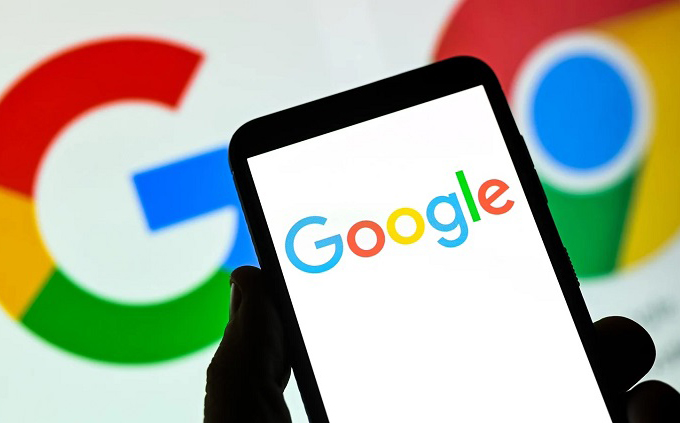
Google unveils Private AI Compute to deliver cloud-level intelligence with on-device privacy protection
Image Credit: AI-Generated
Why Google built Private AI Compute
As AI systems evolve, they have become increasingly personal — capable of predicting needs, generating insights, and responding in real time. However, such capabilities demand computational power that local devices cannot provide alone. This AI News report explains that Google’s Private AI Compute bridges this gap by allowing Gemini models to process data in the cloud securely, maintaining user privacy while delivering higher performance.
Through this approach, users can enjoy faster responses, smarter suggestions, and more personalized outcomes without surrendering control of their personal data. The system combines the reasoning power of cloud-based AI with the trust and privacy of local processing.
How it protects user data
Private AI Compute operates within a multilayered privacy and security framework rooted in Google’s Secure AI Framework (SAIF) and Privacy Principles. The company says the platform uses a protected computing environment that isolates data during processing, preventing unauthorized access.
• Unified Google infrastructure: The entire system runs on Google’s proprietary hardware, powered by custom Tensor Processing Units (TPUs) and secured through Titanium Intelligence Enclaves (TIE), which create a hardware barrier protecting sensitive computations.
• Encrypted connections: Before any data is processed, encryption and remote attestation ensure it connects only to verified and secure environments. Once inside, the data remains sealed from external access.
• Zero access assurance: Even Google engineers are unable to view, retrieve, or interfere with data within the Private AI Compute system.
Smarter features through hybrid intelligence
The platform already boosts the performance of AI-powered tools. For instance, Magic Cue on Pixel 10 now provides more accurate real-time suggestions, while the Recorder app can produce multilingual summaries by leveraging cloud-level computation. This hybrid model allows Google to scale AI capabilities globally while preserving privacy — a combination that could eventually transform personal assistants, productivity software, and accessibility tools.
A step toward ethical and transparent AI
Google calls Private AI Compute “just the beginning,” positioning it as the foundation for a new generation of AI that is both powerful and responsible. As AI becomes increasingly integrated into daily life, users are demanding transparency, safety, and control over their data. Google’s latest innovation signals a major step toward that goal — blending performance and privacy in a way that could redefine how cloud AI operates worldwide. For the latest on Google AI products, keep on logging to Thailand AI News