
What To Know
- China’s artificial intelligence ecosystem has entered a new and formidable phase, with Moonshot AI’s latest breakthroughs accelerating global concerns that the country is closing the gap with the United States far faster than previously expected.
- The company has reportedly informed partners that it plans to pursue an IPO as early as next year, signaling confidence not only in its technology but also in its long-term positioning in the global AI ecosystem.
Thailand AI News: China’s Rapid Rise in Open Weight AI Models
China’s artificial intelligence ecosystem has entered a new and formidable phase, with Moonshot AI’s latest breakthroughs accelerating global concerns that the country is closing the gap with the United States far faster than previously expected. The Beijing-based start-up is now drawing international attention, not only for its benchmark-crushing models but also for its fast-growing financial valuation and expanding global ambitions. This Thailand AI News report reflects how Chinese developers are rapidly elevating their position in the worldwide AI race despite Washington’s efforts to restrict China’s access to advanced chips from companies like Nvidia and AMD.

Moonshot AI’s new Kimi K2 model intensifies the global race for AI dominance
Image Credit: Moonshot AI
Moonshot AI’s new Kimi K2 Thinking model has emerged as a focus point in technology circles. Unlike many US models that remain proprietary and closed, Kimi K2 is built as an open-weight reasoning model that allows developers to download and adapt its parameters. This strategic openness is reshaping discussions about accessibility, collaboration and innovation in AI, especially at a time when global regulators and tech leaders are debating how to balance openness with security.
The Rise of Open Weight AI and Why It Matters
Open-weight models have gained traction because they allow full modification, experimentation and downstream innovation. For smaller companies, research labs and developers around the world, these models eliminate enormous cost and infrastructure barriers that previously restricted participation in advanced AI development.
By releasing model weights openly, Chinese labs such as Moonshot and MiniMax are cultivating wider ecosystems of developers who can enhance, extend and localize the models for specialized uses. This shift is particularly disruptive in regions where AI investment is still emerging, enabling a larger global talent base to actively contribute to state-of-the-art AI rather than merely consuming solutions built elsewhere.
Open-weight models have also proven surprisingly strong in independent tests. Moonshot’s Kimi K2 Thinking surpassed xAI’s Grok 4 and Anthropic’s Claude Sonnet 4.5 on Artificial Analysis’s Intelligence Index, scoring 66.98 compared with Grok’s 65.26 and Sonnet’s 62.66. While OpenAI’s GPT-5.1 remains slightly ahead, Kimi K2 has narrowed the gap to a degree that analysts did not anticipate for at least another year.
China’s Growing Leverage in the Global AI Race
The speed of these developments is fueling geopolitical anxiety. Nvidia CEO Jensen Huang recently noted that China could overtake the United States due to lower energy costs and more flexible regulations. China also far outpaced US electricity expansion last year, adding 425 gigawatts of capacity compared with just 37.7 gigawatts in the US, a factor that profoundly affects the cost of training and operating large AI models.
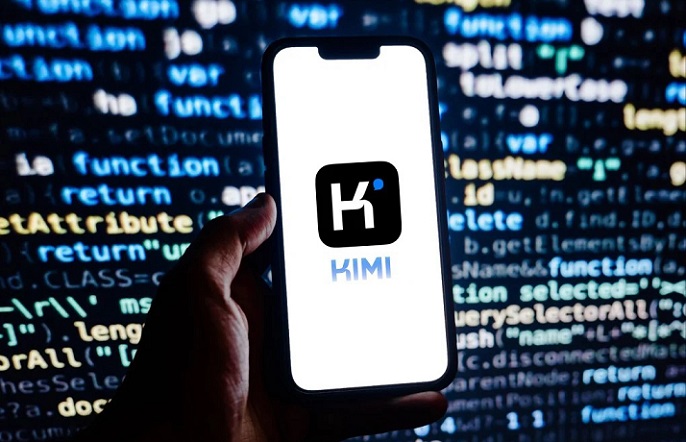
Moonshot AI’s new Kimi K2 model has broken numerous industry benchmarks, making it far superior than most existing AI models
Image Credit: Moonshot AI
Moonshot AI is now expected to raise several hundred million dollars in fresh funding from major investors such as IDG Capital and Tencent, potentially boosting its valuation to around 4 billion dollars. The company has reportedly informed partners that it plans to pursue an IPO as early as next year, signaling confidence not only in its technology but also in its long-term positioning in the global AI ecosystem.
Industry experts caution, however, that benchmark dominance does not automatically translate to economic dominance. Many public benchmarks are susceptible to targeted training, though Kimi K2’s strong results on AA-Omniscience—a private, manipulation-resistant benchmark—indicate that its capabilities may be more robust than skeptics expected.
Expanding Influence and What Comes Next
The rapid acceleration of Chinese labs has prompted renewed calls in the US for stronger regulatory efforts, enhanced energy investment and accelerated model development. Meanwhile, AI researchers globally are debating whether open-weight or closed-weight strategies will ultimately dominate. With China now surpassing the United States in open-weight intelligence rankings, the race has clearly entered a volatile and unpredictable new chapter.
As the world watches, Moonshot AI’s trajectory demonstrates that technical innovation, compute availability and regulatory flexibility may define the next decade of AI leadership. The coming years are likely to see sharper competition, intensified investment and new strategic alliances as nations and companies fight to shape the future of artificial intelligence.
Looking Ahead
The momentum behind Moonshot AI shows no signs of slowing, and its progress is forcing a reassessment of global AI capabilities. The rise of open-weight systems, combined with accelerated Chinese investment and infrastructure growth, suggests that the technological balance of power may shift more dramatically than expected. As more AI laboratories push into frontier-level performance, the world will need to rethink how innovation, regulation and competition interact across borders and industries, ensuring that AI development remains both safe and globally beneficial.
For more details on Moonshot AI, visit: https://www.moonshot.ai/
For the latest on new AI platforms and models from China, keep on logging to Thailand AI News.