

What To Know
- The unveiling took place during the Baidu World technology conference, where the tech giant positioned its new chips as an answer to China’s tightening access to high-end US processors used in advanced training and inference workloads.
- As global tensions continue to shape the technology supply chain, Baidu’s latest hardware strategy signals a determination to achieve self-reliance and strengthen its role in the country’s AI future.
AI News: Baidu Pushes Ahead with New Generation of Domestic AI Chips
China’s Baidu is accelerating its technological ambitions with the launch of two newly developed artificial intelligence semiconductors, a move aimed directly at countering US export restrictions and ensuring long-term domestic computing independence. The unveiling took place during the Baidu World technology conference, where the tech giant positioned its new chips as an answer to China’s tightening access to high-end US processors used in advanced training and inference workloads. As global tensions continue to shape the technology supply chain, Baidu’s latest hardware strategy signals a determination to achieve self-reliance and strengthen its role in the country’s AI future.
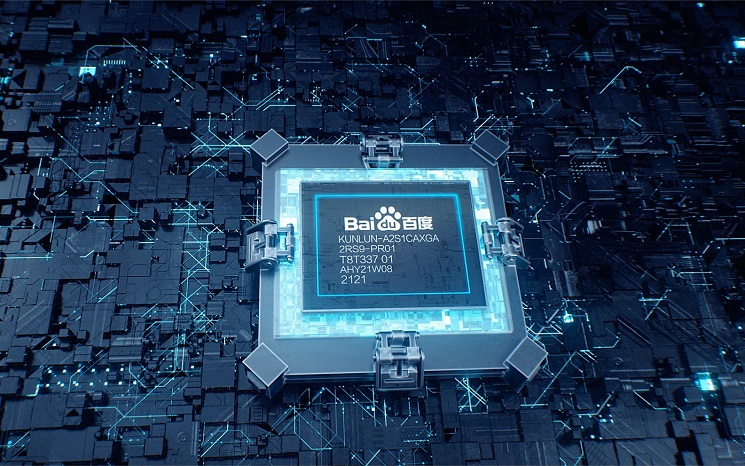
Baidu’s new AI chip lineup marks a major leap toward China’s computing independence.
Image Credit: Baidu
A New Chapter in China’s AI Hardware Race
The first of Baidu’s new offerings, the M100 chip, is designed specifically for inference—the stage where AI models process real-time user requests. The chip is expected to enter the market in early 2026, providing local companies a low-cost, high-efficiency alternative to US-made hardware. The more advanced M300 chip will support both training and inference and is scheduled to debut in early 2027, marking one of Baidu’s most ambitious hardware commitments to date. As investors reacted cautiously, Baidu’s US-listed shares edged slightly higher before markets opened while its Hong Kong shares remained stable. This AI News report marks a broader shift in China’s AI ecosystem, one increasingly driven by domestic chipmaking rather than reliance on foreign suppliers.
China Levels Up with Massive Supernode Power Systems
Beyond standalone chips, Baidu also introduced two powerful supernode systems that aggregate hundreds of processors using advanced networking technology. These systems are designed to overcome the limitations of individual chip performance by allowing massive parallel computation. The Tianchi 256 supernode, built using 256 of Baidu’s P800 processors, is expected in the first half of next year. A larger 512-chip version will follow in the second half, offering Chinese developers computational scale previously achievable only through foreign hardware.
Huawei’s CloudMatrix 384—built on 384 Ascend 910C chips—has already been viewed by analysts as surpassing Nvidia’s GB200 NVL72 in certain system-level benchmarks. With both Baidu and Huawei pursuing aggressive multi-chip architectures, China’s ability to operate high-end AI data centers without imported semiconductors is rapidly expanding.
Baidu Strengthens Its AI Stack with Enhanced Ernie Model
The company did not stop at hardware. It also announced a new version of its flagship Ernie large language model, upgraded to handle complex tasks spanning text, images, and video. The improved model reinforces Baidu’s belief that competitive AI advancement requires tight integration between chips, supercomputing nodes, and foundational models—a vertically unified approach increasingly common among China’s tech giants.
What This Means for China’s AI Future
Baidu’s twin strategy of boosting chip capacity and upgrading its LLM stack reflects a larger trend in China: building an AI ecosystem that can withstand geopolitical pressure while still competing globally. These new chips and supernodes push the nation closer to technological independence. They also raise the stakes in an already intense global AI arms race, where computational power determines innovation, resilience, and national advantage. With domestic companies accelerating their roadmaps, China appears positioned to reshape the global AI hardware landscape in ways that may ripple through supply chains, enterprise planning, and regulatory strategies worldwide. This transformative momentum will likely intensify over the coming years, altering how AI systems are trained, deployed, and governed on a global scale.
For the latest on AI Chips, keep on logging to Thailand AI News.