
What To Know
- Built on the advanced Qwen3-Omni foundation and trained on tens of millions of hours of voice data, the model promises groundbreaking accuracy—even in environments with background noise or challenging language patterns.
- This technology raises the bar not only in government or enterprise sectors, but also in creative uses like subtitling, livestream captions, or karaoke and music analysis—areas where accurate lyric transcription has traditionally been a real hurdle.
AI News: Alibaba Unveils Game-Changing Qwen3-ASR-Flash Model
Alibaba has just taken a giant leap forward in AI transcription with the debut of its new Qwen3-ASR-Flash model. Built on the advanced Qwen3-Omni foundation and trained on tens of millions of hours of voice data, the model promises groundbreaking accuracy—even in environments with background noise or challenging language patterns. Its performance in recent August 2025 tests suggests a bold step ahead of rivals in the increasingly fierce world of AI speech recognition.
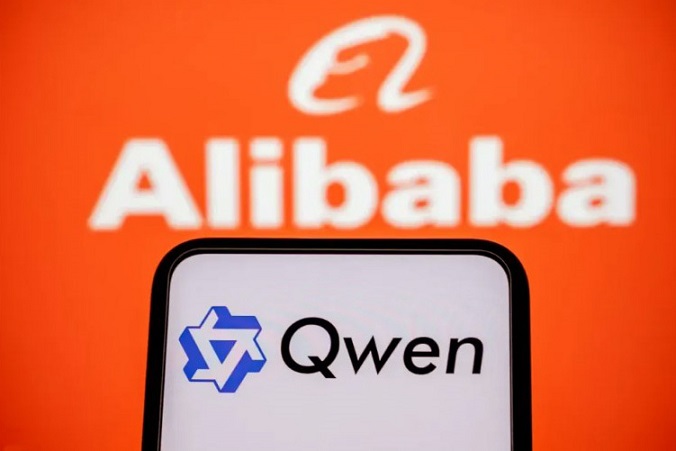
Alibaba unveils Qwen3 ASR Flash setting new benchmarks in AI powered speech transcription
Image Credit: Alibaba’s Qwen
In a public benchmark for standard Chinese speech recognition, Qwen3-ASR-Flash posted an astonishingly low error rate of just 3.97 percent, sharply outperforming competitors such as Gemini-2.5-Pro (8.98 percent) and GPT4o-Transcribe (15.72 percent). But the real highlight came when tested on regional accents and more tricky acoustic scenarios. According to this AI News report, it handled Chinese accent diversity at 3.48 percent and delivered a strong English transcription rate of 3.81 percent—well ahead of Gemini’s 7.63 percent and GPT4o’s 8.45 percent.
Outperforming Rivals in Song Lyrics and Music Transcription
Even more surprising was its ability to transcribe lyrics embedded within music. On lyric-only tests, Qwen3-ASR-Flash scored a mere 4.51 percent error rate—far ahead of its competitors. When evaluating full musical tracks, it maintained a stellar 9.96 percent error rate, compared to Gemini-2.5-Pro’s 32.79 percent and GPT4o-Transcribe’s 58.59 percent. These results underscore the model’s ability to decipher sound in some of the toughest acoustic environments.
Intelligent Contextual Biasing for Tailored Transcripts
Qwen3-ASR-Flash introduces a highly refined feature: flexible contextual biasing. Gone are the days of meticulously formatted keyword lists—users can now supply context in any format, from random documents to simple keyword dumps, and the model will intelligently use background information to enhance accuracy. Amazingly, even irrelevant context doesn’t derail core performance. This makes it easier than ever to customize transcription to specific jargon, names, or topics without complex preprocessing.
Expansive Multilingual and Dialect Coverage
Alibaba’s model aims to be a global transcription powerhouse. Kapable of transcribing in 11 languages plus their dialects and accents using just one single unified model, it covers Mandarin, Cantonese, Sichuanese, Minnan (Hokkien), and Wu among Chinese variants, and accommodates British, American, and other regional varieties of English. Additions include French, German, Spanish, Italian, Portuguese, Russian, Japanese, Korean, and Arabic. The model also automatically detects the language being spoken and filters out silence or background noise to generate cleaner transcripts—an edge over prior transcription tools.
Implications for Thailand and Beyond
For transcription services and AI developers in Thailand, Qwen3-ASR-Flash brings exciting possibilities. Its multilingual capabilities could be extended to Thai or regional languages in future updates, offering fast, accurate transcription for media, education, legal documentation, and more. The contextual biasing feature could let local businesses supply Thai-specific terms or phrases, improving results significantly even without perfect training data.
This technology raises the bar not only in government or enterprise sectors, but also in creative uses like subtitling, livestream captions, or karaoke and music analysis—areas where accurate lyric transcription has traditionally been a real hurdle.
With these innovations, Alibaba is positioning itself at the forefront of next-gen speech transcription—models that can understand language in real-world noise, navigate dialects, and adapt contextually in ways that feel both intelligent and human-like.
For more details, visit:
For the latest on Alibaba’s Qwen, keep on logging to Thailand AI News.