

What To Know
- SCBX has released Thailand’s first in-depth national study focused exclusively on how Thai consumers truly perceive, use, and expect artificial intelligence, shedding light on a critical disconnect between widespread AI usage and deep trust.
- The SCBX report serves as a timely roadmap, showing that organizations willing to prioritize trust, simplicity, and transparency will be best positioned to build lasting relationships in Thailand’s next phase of digital and financial transformation.
Thailand AI News: SCBX has released Thailand’s first in-depth national study focused exclusively on how Thai consumers truly perceive, use, and expect artificial intelligence, shedding light on a critical disconnect between widespread AI usage and deep trust. The newly launched “thAI Consumer AI Adoption 2026” report goes beyond surface-level statistics to explore real behaviors, emotions, and concerns shaping AI adoption, particularly within financial services, an area where trust remains paramount.

Image Credit: SCBX
Based on extensive empirical research spanning generations, professions, and digital literacy levels, the study paints a distinctly Thai picture of AI reality that differs sharply from global benchmarks. While AI tools are now embedded in daily life, from banking apps to translation tools, the report reveals that confidence and understanding have not progressed at the same pace. This Thailand AI News report highlights a pivotal insight: Thai consumers are not rejecting AI, but they are carefully holding it at arm’s length until it proves it can genuinely protect and simplify their lives.
High Awareness, Limited Confidence
According to the findings, over 90 percent of Thai consumers are aware of AI, and more than 80 percent already use AI-powered features regularly. These uses are largely passive or convenience-driven, such as content recommendations, search optimization, language translation, and automated banking functions. However, only 16 percent of respondents qualify as “full potential AI users,” meaning they actively leverage AI for deeper decision-making or complex problem-solving.
The majority fall into a middle ground, acknowledging AI’s usefulness while remaining cautious. This gap between usage and trust underscores why advanced AI adoption in financial services remains limited, despite high familiarity.
Nine Distinct AI Consumer Profiles Emerge
The SCBX study categorizes Thai consumers into nine AI-era profiles, ranging from highly engaged “Pro formance” users who rely on AI to achieve measurable success, to “Digital Rejectors” who resist AI entirely. The largest segments are Smart Minimalists and Skeptical Practitioners, together accounting for roughly 70 percent of the population. These consumers use AI selectively, prioritizing clear benefits while remaining alert to potential risks.
Three groups stand out as the primary drivers of AI adoption in Thailand: Smart Minimalists, Life Optimizers, and Pro formance users. These segments represent the most promising audience for organizations seeking to expand AI-enabled services.
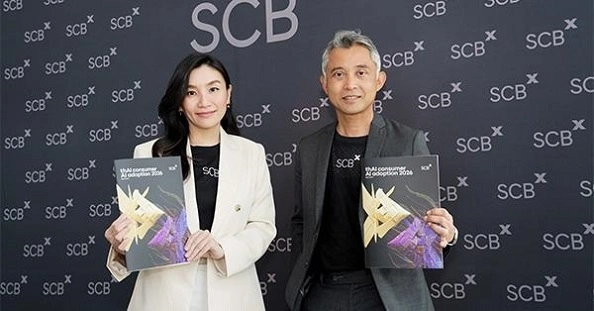
Image Credit: SCBX
Safety and Complexity Remain Major Barriers
Financial anxiety remains the strongest brake on deeper AI adoption. Consumers cite fears of transferring money to suspicious accounts, fraud or hacking leading to lost savings, and the complexity of comparing loans, promotions, and investment options. Rather than demanding futuristic features, Thai consumers want AI to act as a shield, reducing errors, minimizing repetitive tasks, and providing clarity in an increasingly complex financial environment.
Executives Emphasize Trust Over Technology
Mr. Sutirapan Sakkawatra, Chief Customer Officer at SCBX, explained that the initiative began with a fundamental question: whether customers truly see SCBX as an AI-first organization. He noted that internal technological progress does not automatically translate into consumer confidence, emphasizing that meaningful AI must first address trust, understanding, and everyday relevance.
Ms. Yada Sareesavetrat, Senior Consumer Insights and Market Research Management Expert at SCBX, reinforced this view, stressing that human validation remains essential in high-risk financial services. Explainable, verifiable, and transparent AI systems are key to encouraging adoption in areas such as portfolio management and automated financial recommendations.
What Thai Organizations Must Do Next
The report outlines three critical dimensions for becoming genuinely AI-first: embedding trust by design, maintaining human-in-the-loop validation, and transforming complexity into accessible, human-centric experiences. Thai consumers do not fear advanced technology; they fear being excluded by it.
AI in Thailand is steadily evolving into a new layer of consumer infrastructure rather than a novelty. The SCBX report serves as a timely roadmap, showing that organizations willing to prioritize trust, simplicity, and transparency will be best positioned to build lasting relationships in Thailand’s next phase of digital and financial transformation. These insights suggest that the future of AI adoption in Thailand will be driven less by technological ambition and more by emotional assurance, practical value, and respectful collaboration between humans and intelligent systems.
For the latest about AI adoption in Thailand, keep on logging to Thailand AI News.